Most churches are on too many social media platforms.
Facebook, Instagram, YouTube, TikTok, X, LinkedIn — the list never stops growing, and most churches can barely keep up with one. So what ends up happening? A volunteer or staff member spreads themselves across five platforms, posts inconsistently on all of them, and quietly burns out. Meanwhile the results stay flat.
The problem isn’t that your church is on too many platforms. The problem is that nobody ever sat down and asked the harder question: which of these are actually worth our time?
Because here’s the truth nobody says out loud — not every platform serves the same purpose, not every platform reaches the same people, and not every platform deserves a spot on your already-overcrowded ministry to-do list. The churches making the biggest impact on social media right now aren’t the ones doing the most. They’re the ones doing the right things consistently on the right platforms.
This episode is the platform-by-platform conversation most church leaders have never had. Who’s actually there. What kind of content works. Where the reach has died. And where the real opportunity is in 2026.
The Pressure to Be Everywhere
Walk into any church staff meeting and you’ll hear some version of the same conversation: “We need to be on TikTok.” Or Threads. Or whatever new platform somebody’s nephew told them about last week.
The reasoning is always FOMO. Some other church across town is “killing it” on a platform you’re not on, so you feel like you have to jump in. The result is a church account on five different platforms, a tired staff member doing the bare minimum on each, and a presence that screams we’re not really here on every single one of them.
Stale accounts are worse than no accounts. A first-time visitor checking your church on Instagram and seeing the most recent post is from eight months ago doesn’t think “oh, they’re focused on other things.” They think “is this church still meeting?”
So before we go platform by platform, here’s the mindset shift: picking the right two or three platforms and doing them well will outperform a half-effort across six every single time.
Facebook: Diminishing Returns, With One Exception
Facebook used to be the default. For about a decade, every church that started a digital presence started it on Facebook, and it worked. You could post something on a Tuesday and most of your followers would actually see it.
Those days are about seven years in the past.
We’ve now lived through two major eras of Facebook. The chronological feed era — where you’d see content from the people and pages you followed in the order they posted. And the discovery algorithm era, where the platform decides what you see based on what it thinks will keep you scrolling. We are deep into the second era, and church pages have not aged well in it.
The honest number: the average organic reach on a church Facebook page is around 1%. That means if your church has 1,000 followers and you post an announcement about Sunday, somewhere around 10 of them will see it. Not 1,000. Ten.
For most churches, that’s the death blow. If Facebook can’t even reach the people who actively chose to follow you, it definitely can’t reach new visitors who haven’t.
Who’s actually still on Facebook?
The reputation is mostly true. Facebook today is primarily a 40-and-up platform. If your church demographic skews older — mainline congregations, established churches with longtime members, churches in communities where most adults are 45+ — there’s still a flicker of value in maintaining a presence. But for new church plants and any church trying to reach Gen Z or younger millennials, Facebook is not where your time should be going.
The one exception: Facebook Groups
Here’s the carve-out worth knowing. Facebook pages are dying for churches, but Facebook groups are a different story. Groups are where Facebook still has real organic energy, because people actively seek them out around interests and affinities — local towns, neighborhoods, hobbies, shared experiences.
If you set up a thoughtful local community group — say, “Things to Do in [Your Town]” or “[Your Neighborhood] Parents” — and your church is generously involved in the conversation without constantly self-promoting, that’s a quiet way to stay woven into your community on a platform that otherwise won’t reach anyone.
Fifteen years ago we told every church to set up a page, not a group. If we were giving that advice for the first time today, it would be the opposite.
Instagram: The Vibe Check Platform
If Facebook is fading, Instagram is the platform that absorbed everything churches used to put into Facebook — and it’s where most of your effort should now go.
Here’s the part most pastors don’t realize: Gen Z uses Instagram as a search engine. Not just to look up specific accounts. Actually to search. When a young adult is looking for a church in your community, a lot of them aren’t typing it into Google — they’re typing it into the Instagram search bar, scrolling through accounts, and deciding which church looks alive enough to walk into.
This changes what your Instagram needs to do. It’s not just a billboard anymore. It’s a vibe check.
What works on Instagram in 2026
Two things are doing the heaviest lifting right now:
- Reels. Short-form vertical video. Same kinds of clips you’d put on TikTok or YouTube Shorts — sermon moments, worship, behind-the-scenes, testimonies. Reels are still the #1 way to reach people who don’t already follow you.
- Carousels. This is the surprise. Carousels — those swipeable multi-photo posts — may be getting more organic reach right now than Reels. A well-curated photography carousel from Sunday service. A text-based carousel walking through a theological idea or a question people are wrestling with. Done right, these are eating the algorithm.
What’s not working
Stop posting standalone scripture graphics. They were a strategy that worked a decade ago. Today they’re filler that the algorithm doesn’t reward and your followers don’t engage with.
The same goes for the “pray for [insert tragedy]” graphic that goes up after every news event. They feel performative, they don’t move anyone, and racing to be the first church to post one is a bad use of your time.
Stories aren’t optional
Here’s a small thing that punches well above its weight: the ring around your profile picture. When a young adult lands on your church’s Instagram and sees a fresh story posted in the last 24 hours, that ring is communicating one thing — we’re alive, things are happening here, this church is doing stuff.
Even if they never tap the story open, that signal alone is doing work. And if they do tap it — and see a photo from a baptism, a clip from yesterday’s small group, a quick announcement about an event this weekend — you’ve just done what no static post on the feed could do. You’ve made your church feel current.
This means stories shouldn’t only happen on Sunday. People are searching for churches Tuesday, Wednesday, Thursday. Whatever day they’re searching, your church should look awake.
YouTube: The Most Slept-On Platform
If we had to pick one platform where churches are leaving the most fruit on the tree, it’s YouTube.
Most churches technically use YouTube. They upload Sunday sermons. The video sits there. It gets 11 views. They move on with their week. To them, YouTube isn’t really a social platform — it’s an archive. A place to store videos.
That mindset is the entire problem.
YouTube is a social platform. People follow channels. They subscribe. They get recommended new content based on what they’ve watched. They comment. The algorithm is one of the most powerful discovery engines on the internet — and most churches are essentially uploading to it with the cap still on the lens.
Why this matters more than churches think
A healthy church is going to spend more time watching content on YouTube than its members spend physically sitting in your sanctuary. That’s not a value judgment — being in the room with other believers is irreplaceable, and we’d never argue otherwise. But the math is the math. If you’re a 200-person church and your sermon is on YouTube, the sermon is reaching far more eyeballs throughout the week than the room ever does.
Which means the way you publish to YouTube is one of the most consequential things your communications team does. And most churches are getting it wrong in the same two ways.
The metric that actually matters
Stop chasing views. Total watch time is the metric YouTube actually rewards.
A 45-minute sermon that gets 100 views with a median watch time of 22 minutes is dramatically more valuable to the algorithm — and more valuable to your church — than a clip that gets 1,000 views with a median watch time of 11 seconds. Watch time is what tells YouTube people are actually engaging with this content, and watch time is what gets you recommended to new people.
Packaging is the whole game
The two things that determine whether anyone clicks on your sermon in the first place are the title and the thumbnail. That’s it. We have a team member at REACHRIGHT whose job is essentially half-time YouTube thumbnails. That’s how much these two things matter.
Most churches title their sermons something like “Grow Your Faith — Pastor John — April 7, 2026 Sunday Sermon.” Nobody clicks on that. It’s a file label, not a title.
Wrestle with it. What’s the actual hook? What question is this sermon answering that someone scrolling YouTube on a Tuesday night might want the answer to? “Why Does God Feel Distant Right Now?” gets clicks. “Sunday Sermon April 7” gets ignored.
Same for thumbnails. A still frame of your pastor on stage isn’t a thumbnail. A real thumbnail has a tight crop, a face with expression, a few words of overlay text, and clear visual contrast. The good news is you don’t need a Hollywood team — you need someone who treats this like a job and not like an afterthought.
One exception on titles
If your senior pastor is a known quantity — Stetzer, Furtick, Chandler — yes, lead with the name. People are searching for them. But for 99.9% of churches, the pastor’s name in the title is dead weight. Lead with the question or the hook.
One more thing on YouTube: Gen Alpha is a YouTube generation. Parents who didn’t trust TikTok with their 8-year-olds were comfortable letting them watch YouTube. Those kids are now 14 and 15, and YouTube is the platform they grew up on. If you care about reaching the next decade of teenagers, YouTube is where they’re going to be.
TikTok: Hard Mode, But Worth It for the Right Churches
TikTok is the platform churches stumble around on the most, and it’s understandable. It moves faster than the others, the content style is different, and most churches’ social media is not being run by people in TikTok’s primary demographic.
For the generic church, we’d rank TikTok third — behind YouTube and Instagram. But the rank changes fast depending on who you’re trying to reach.
What’s actually working on TikTok
Repurposed sermon content. Specifically, sermon clips. The same short vertical video that lives on Reels and Shorts can perform on TikTok — with one important caveat. TikTok demands the highest production value of any short-form platform right now.
That’s counterintuitive, because TikTok built its reputation on raw, homespun, low-fi content. But the platform has matured. Marketers piled in. Competition is brutal. And the bar for what gets organic reach has climbed considerably.
A generic AI sermon clipper that pulls a random 30-second moment from your sermon and dumps it on TikTok? That worked two years ago. Today, it mostly doesn’t. The clips that hit are the ones with intentional cropping, real captions, a strong opening hook in the first two seconds, and a clear payoff.
Should your church bother?
If you have the capacity to actually produce good short-form video — meaning someone on your team is thinking about hooks, captions, and editing, not just running a clipper — yes. Especially if you’re trying to reach Gen Z, who are still squarely on TikTok.
If you don’t have that capacity, it’s okay to skip TikTok entirely and put that energy into doing YouTube and Instagram well. Better to be excellent on two platforms than mediocre on three.
X (Twitter) and LinkedIn: Personal, Not Church
These two platforms get lumped together because the answer is the same: they’re a waste of time for most church accounts, but they can be gold for individual pastors.
Why church accounts struggle here
X and LinkedIn are not platforms where people follow brands. They’re platforms where people follow people. Your church’s X account, no matter how thoughtful, is competing with personal posts from individual humans — and the algorithm and the user behavior both heavily favor humans.
Look at the biggest brands in any industry. Nike, Lululemon, Apple — even on X they have small followings relative to individual creators in their space. Brands that succeed on X are usually the ones doing something gutsy — Wendy’s roasting customers, for example. Most churches are not going to roast anyone, and shouldn’t.
The realistic move for most churches: maintain a basic profile on each so the church name is claimed and someone Googling you finds something legitimate. Post a few times a year — a new staff hire, a major announcement — and otherwise leave it alone.
Why pastors should consider both
This is the flip side. Individual pastors can build real audiences on X and LinkedIn that move ministry forward.
X is where pastors can connect with other pastors, theologians, and church leaders. The format rewards punchy, direct writing — short observations, quick reactions, theological questions. It’s an educational and peer-network platform more than a reach-the-world platform.
LinkedIn, surprisingly, has become a strong platform for pastors who write more thoughtful, longer-form content. It tilts more corporate and HR in tone, but the engagement on substantive posts has been climbing fast — engagement that’s frankly outperforming X for some communicators right now.
The catch: this only works if the pastor is the one actually writing. You can’t delegate this kind of presence to a comms team. It has to be the actual voice and actual thoughts of the person whose name is on the account, posted with real consistency.
If a pastor doesn’t have time for that — and most don’t — skip both platforms entirely. There’s no shame in that.
Snapchat: Not a Reach Channel
Quick mention because the question comes up. Snapchat is primarily a private messaging platform between people who already know each other. As a discovery or organic reach channel for churches, it’s effectively zero. If you’re trying to reach Gen Z, Instagram and TikTok are dramatically better uses of your time.
The Mindset Shift: Social Media as Ministry, Not Funnel
Here’s the bigger reframe most churches haven’t made yet.
For the last 15 years, we’ve all treated social media as a tool to get people to come to the real ministry. Post a clip to invite people to Sunday. Post a graphic about an upcoming event. Drive people to the link in bio. The point of social media was always to push people off social media and into the room.
That model is fighting the platforms.
Every social platform now actively suppresses content that tries to pull people away. Post a Facebook link to an external page — the algorithm buries it. Try to drop a link in a regular Instagram caption — it’s not even clickable, hence “link in bio.” The platforms have figured out that off-platform clicks hurt their ad revenue, and they’ve responded accordingly.
The pivot a healthy church has to make is this: stop treating social media as a funnel to your ministry. Start treating it as a place where ministry happens.
That doesn’t mean Sunday service stops mattering. The room is still where the real spiritual heavy lifting happens. But it does mean we have to take seriously that people are encountering Jesus through content online — every day, all over the world. Seeds are being planted. Sometimes they’re being harvested. Pretending that isn’t ministry is just stubborn.
What this looks like practically
People generally come to the Lord in two seasons of life: tragedy and transition. A divorce. A death in the family. A job loss. A child in trouble. A diagnosis. A move to a new city.
When those moments hit, who do they call? They call the church they already know. The church whose pastor they’ve watched online for a year. The church whose content has been showing up in their feed without them realizing they were paying attention.
The play isn’t to tell people “come to our church when you’re in trouble.” The play is to be there generously, in their feed, in their algorithm, in the background of their week, so that when the moment comes, your church is who they think of.
That’s social media as ministry. Not as funnel.
Your Church’s Audit Checklist
If you walk away from this episode with one homework assignment, it’s this. Open your church’s accounts right now and run the audit.
1. Pick your two or three platforms
For most churches, the answer is YouTube and Instagram. Maybe TikTok if you have the capacity. Older congregations, add Facebook. Everything else, scale back. You don’t have to delete the accounts — just stop pretending you’re going to consistently post there.
2. Open your Instagram on a phone
Pretend you’ve never been to your church. Does the most recent post look fresh? Is there a story up from the last 24 hours? Do the photos and videos communicate that real life is happening at this church? If any answer is no, that’s the work.
3. Audit your last 10 YouTube videos
Pull up the titles. Are any of them rewrites that someone would actually want to click? Or are they all “[Date] Sunday Service”? Pull up the thumbnails. Are they doing real packaging work, or are they default still frames? This is where the biggest unrealized growth is sitting.
4. Look at your Facebook
Ask honestly: is anyone actually seeing this? If your last three posts are getting reach in the single digits or low double digits, accept that and stop putting fresh effort there. Maintain the page, don’t pour into it.
5. Decide what to drop
This is the hardest one. Pick one platform you’ve been half-doing and explicitly stop doing it. Reclaim that time and put it into the platforms that are actually moving.
The Bottom Line
There is no generic church, so there’s no perfectly generic answer. A mainline congregation reaching adults 45–75 will weigh Facebook differently than a church plant reaching adults 22–32. A youth-heavy ministry will lean harder into TikTok than a traditional church will.
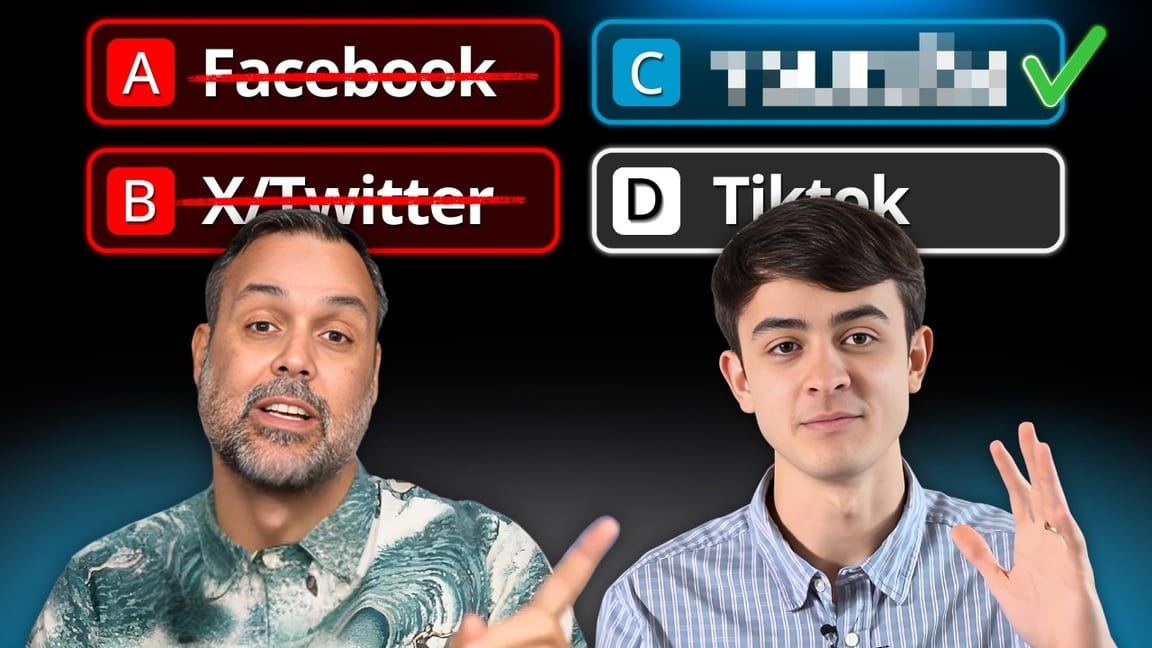
But for the broadly average church, the priority order is clear:
- YouTube — most slept-on, biggest payoff, you’re already producing the content
- Instagram — the vibe-check platform; carousels and Reels lead
- TikTok — if you have the production capacity, especially for Gen Z reach
- Facebook — only if your demographic is 40+, and lean on Groups
- X / LinkedIn — pastor-personal, not church-brand
- Everything else — pass
The churches making the biggest impact on social media aren’t the ones doing the most. They’re the ones doing the right things, consistently, on the right platforms.
Pick your lane. Show up well. And stop feeling guilty about every platform you’re not on — because the right two platforms done right is all your church actually needs.
Your Next Step
Not sure how your church’s social presence stacks up? We offer a free church marketing and website review. Our team will look at your social accounts, your website, your Google presence, and your overall digital strategy — then send back honest, specific recommendations you can actually use. No sales pitch. Real feedback from people who do this every day.
Turnaround is about 48 hours. It’s free for any church that asks.
More Resources
- Why Your Church Instagram Isn’t Growing (And How to Change That)
- Mastering Church Instagram Reels: Crafting Stories that Connect
- Unlocking the Perfect Social Media Posting Schedule for Churches
- Ranking Church Social Media Trends
- Should Your Pastor Build a Brand on LinkedIn?
- The Biggest Shifts in How People Are Finding Churches Today