Bible study is the foundation of our Christian faith. Using the best Bible study tools (of which there are many) helps us grow in biblical knowledge and deepen our faith.
These Bible study tools will help you explore the Scriptures and gain a better understanding of God’s Word. But how do you find the right Bible study tools for you?
Whether you’re a new Christian, need to prepare for a sermon, or have been studying the Bible for years and want to go deeper, these tools will help you get more out of your Bible study. Ready to learn more?
Let’s jump in.
Finding the Right Bible
Our Bibles are the essential resource we need to know God’s Word, and there are many options available when it comes to translations and formats.
There are a few factors to consider when looking for the right Bible.
Bible Translations
Multiple Bible translations are available, so it can be challenging to decide which one is best for you.
The best way to figure out which translation will work best for you is to read different samples. (Below, we talk about some free online resources where you can read different translations.)
And don’t forget the other stuff! Yes, the translation is important, but also make sure your Bible includes the other things you want. Maybe it’s lots of footnotes with Scripture references and historical context, or maybe it’s the design. Whatever it is, take it all into account so you can have the best Bible study time possible.
How Is the Bible Translated?
The Old Testament is translated from Hebrew and Aramaic, while the New Testament is translated from Greek.
Generally, the various Bible translations are on a spectrum that ranges from word-for-word to thought-for-thought translation techniques.
- Word-for-word is also known as an equivalent or literal translation. This type of translation focuses on preserving the meaning of the original Hebrew, Aramaic, and Greek words.
- Thought-for-thought is also known as a functional equivalent and, on the far end of the spectrum, a paraphrase. These translations focus on preserving the overall meaning in more modern language.
Word-for-Word or Literal Translations
Here are some of the most common literal translation Bible versions:
- Interlinear Bible
- New American Standard Bible (NASB)
- Amplified Bible (AMP)
- English Standard Version (ESV)
- King James Version (KJV)
- Holman Christian Standard Bible (HCSB)
Thought-for-Thought or Functional Equivalent Translations
On the other end of the spectrum are translations that take more liberties with the original text in order to better communicate the meaning in modern language.
Different translations that extend from the middle of the spectrum to paraphrases include:
- New International Version (NIV)
- New Living Translation (NLT)
- Contemporary English Version (CEV)
- The Living Bible
- The Message
- The Passion Translation (TPT)
Study Bibles
Study Bibles are available for most of the different Bible translations. They provide additional resources throughout the whole Bible.
Sometimes, these Bibles contain commentary and valuable insights from a particular individual, usually a pastor or Bible teacher.
Other times, study Bibles are put together by a team of scholars and contain articles and insights from multiple people.
Study-specific Bibles may also include devotionals. And they can focus on particular topics or target different groups.
These Bibles can be a helpful resource for group Bible studies and answering people’s questions. For example:
- Children, youth, women, or men study Bibles
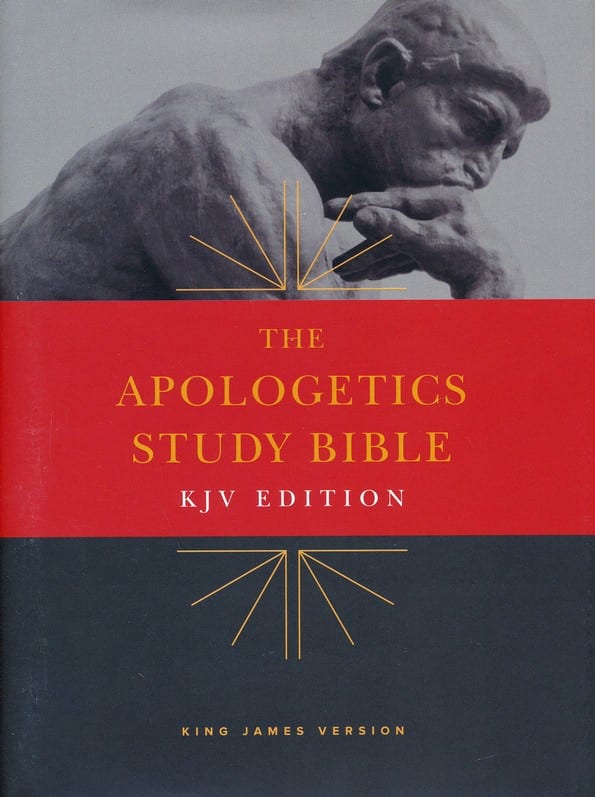
- The Apologetics Study Bible
- She Reads Truth
Most Popular Study Bibles
Here are some of the all-time best-selling study Bibles. They will enhance your general knowledge and provide needed background for Bible study.
Cultural Study Bibles
It can be challenging to understand some of the stories, expressions, and customs in the Bible because they are so different from our own culture.
Cultural study Bibles help explain the historical context and customs of biblical times. Some popular cultural study Bibles include:
Another resource that can help with cultural Bible study and background is Halley’s Bible Handbook.
Bible Journaling
Bible journaling is a popular way to connect with Scripture.
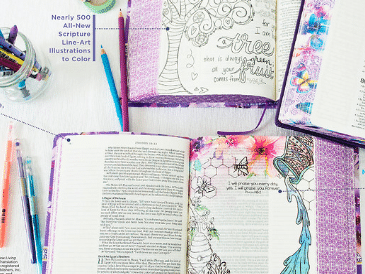
Journaling involves adding your own artwork, sketches, and handwriting into the margins of your Bible. By doing this, you are able to connect with what you are reading and grow even closer to Jesus Christ.
Many different journaling Bibles are available with wide margins for note-taking and creativity.
Popular Journaling Bibles
Bible Journaling Tools
When it comes to Bible journaling, feel free to get creative. Some Bible study tools you could use for journaling include:
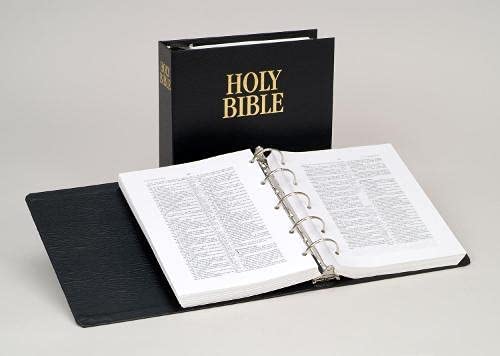
Loose Leaf Bible
If your Bible gets a lot of wear and tear, or you like to make a lot of notes, then you may want to consider a loose leaf Bible.
With the ability to lay flat and spread out, you can dive deep into your Bible study without worrying about the binding.
Bible Study Resources
Now let’s move on to some additional in-depth Bible study tools.
In this section, we’ll cover some of the best maps, dictionaries, concordances, and other study tools to help you dive into Scripture. These Bible-specific study resources are a helpful addition to Bible study books targeted more towards Christian living.
These additional Bible study tools help us grow in our knowledge of historical context, cross-referencing, definitions of words, and studying specific topics or themes.
Consider adding some of these books to your Bible study library!
Atlas and Bible Maps
One of the best ways to deepen your understanding of the Bible is to see where the events took place.
That’s where an atlas comes in handy.
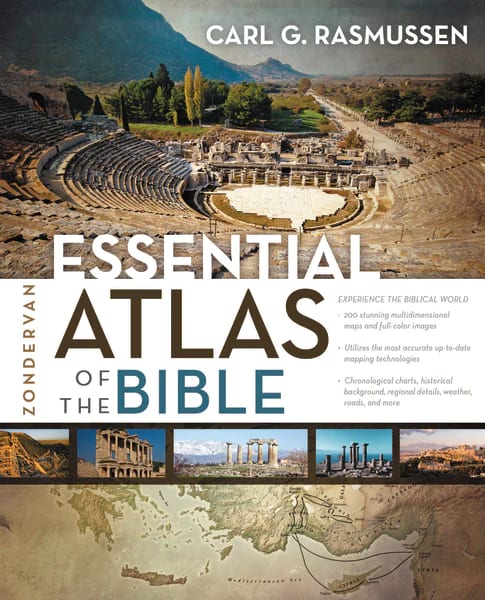
A good Bible atlas will have detailed maps and information about biblical places, people, and history. A few popular Bible atlases include:
- The Essential Atlas of the Bible
- The Holy Land: An Illustrated Guide to Biblical Places
- Holman Bible Atlas
Bible Dictionaries
Another essential resource for studying God’s Word is a Bible dictionary.
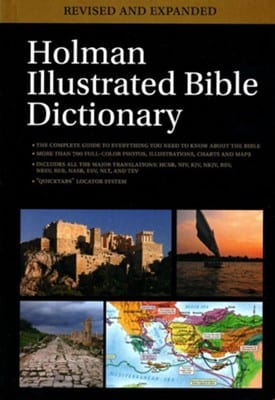
A Bible dictionary can provide definitions and background information for words and topics in Scripture.
You don’t need to look up every word in the Bible, but Bible dictionaries can be a valuable resource when studying difficult passages.
Or maybe you’ve read the same passage many times and taken for granted that you know the meaning. In these cases, digging into a Bible dictionary can help you digest what you’re reading on a deeper level.
Knowing the full meaning of a Hebrew or Greek word can transform your understanding of a passage you thought you already knew.
Some popular Bible dictionaries include:
- Vine’s Complete Expository Dictionary
- The New Unger’s Bible Dictionary
- Holman Illustrated Bible Dictionary
In addition, if you want to explore the original languages your Bible was written in, you can opt for a Hebrew dictionary or Greek dictionary.
Bible Concordance
A Bible concordance is an alphabetical list of words and phrases found in the Bible.
This can be a valuable Bible study tool when you’re looking for specific verses or topics. A concordance can also help you understand the original meaning of words in Scripture.
The best-known concordance for Bible study is Strong’s Exhaustive Concordance of the Bible.
Some Bibles also include a concordance in the appendix or in footnotes, but these are usually not as extensive as Strong’s.
Bible Encyclopedias or Historical Resources
You may find that a Bible encyclopedia does a great job of combining maps, historical context, and archaeological insights.
An encyclopedia can provide a broad overview of people, places, and events in the Bible. Understanding the geographical, cultural, and historical background of Scripture passages can do wonders for making sense of your Bible study.
The New International Bible Encyclopedia has several volumes, including:
- Bible Difficulties
- Bible Characters
- Bible Words
Other options include Nelson’s Illustrated Encyclopedia of the Bible.
Bible Commentaries
Bible commentaries are written by Bible scholars and pastors who provide explanations and interpretations of Scripture.
A Bible commentary can be a helpful study tool, especially when you’re studying a difficult passage.
You may not need a Bible commentary for every book of the Old and New Testament, but it can be beneficial to have a few. Some commentaries have been around for hundreds of years, while others are more recent.
Here are some popular commentaries for Bible study:
- Matthew Henry’s Commentary on the Whole Bible
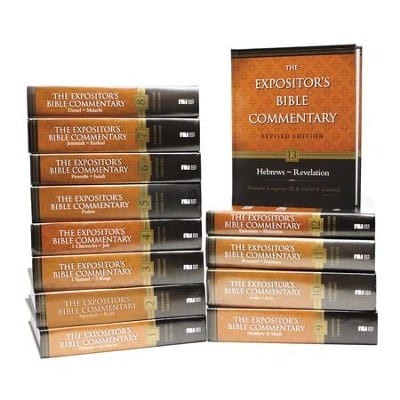
- The Expositor’s Bible Commentary
- The Bible Exposition Commentary by Warren Wiersbe
Savage Mercies
Looking for something free and online? Savage Mercies publishes verse-by-verse Bible studies in plain English, with Greek and Hebrew word studies and every claim cited to its source. It’s written from a Reformed perspective, with in-depth studies on books like John, Job, and Proverbs. It’s a helpful companion when a print commentary leaves you wanting more detail on a single chapter.
Bible Software and Apps
You may love old-fashioned study tools in the form of books, but a great thing about our day and age is having many digital resource options for Bible study. These are certainly more compact and lightweight!
Let’s explore some of these digital Bible study tools.
5 Best Bible Study Software Programs
One modern Bible study tool we can all take advantage of is Bible software.
These programs allow you to search the Bible electronically and access a variety of supplementary study tools. This can be a great way to dig deeper into Scripture, especially if you want to study the original languages or access additional resources.
The amazing news is that some of these Bible software programs can be accessed online completely for FREE.
The list below starts with three online Bible study tools that are free, then moves on to two great paid options if you’re looking for a really in-depth electronic Bible study tool.
Blue Letter Bible (BLB)
Blueletterbible.org offers a free website and app filled with helpful Bible study tools.
You can access commentaries, references, dictionaries, timelines, maps, and much more for free Bible study.
Bible Gateway
Biblegateway.com is a website that allows you to read, search, and compare different versions of the Bible.
You can listen to Scripture online, find devotionals and blog posts, and access study tools like commentaries and concordances.
Bible Gateway also features Scripture Engagement practices with activities and exercises to help you better focus and engage with Scripture.
While some translations and tools are offered for free, you can also pay for a Bible Gateway Plus subscription for added features and fewer ads.
Bible Hub
The Bible Hub website and app also contain a variety of the tools and resources listed here in digital form.
You can compare a wide variety of Bible translations, read verses side by side, or dive into numerous free tools.
One of the interesting Bible tools is “Measures,” which compares lengths, weight, money, time, and dry measures.
You can also find reading plans, devotions, and sermons.
Accordance Bible Software
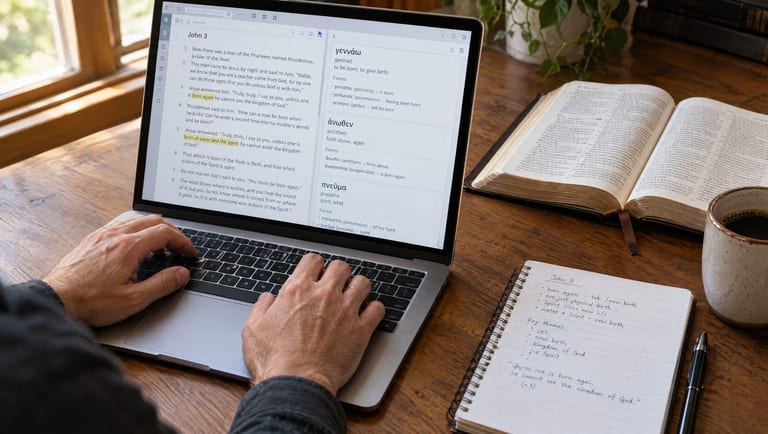
Accordance Bible Software is known for its fast speed, simple interface, and cutting-edge tools.
You can see the Bible come to life with interactive 3D maps, drag-and-drop graphical searching, a dynamic interlinear, and many other Bible study tools.
You can also take advantage of customization tools and sync your program to your mobile devices.
Accordance Pricing Options
Whether you’re a Greek and Hebrew scholar, or simply want to dive deeper into Bible study for your personal benefit, Accordance has a wide range of packages available, from affordable starter collections to extensive scholar libraries. On their pricing page, you can compare collections.
Logos Bible Software
You may have heard of Logos. This is a well-known software tool for in-depth Bible study.
Logos software has a wide array of resources. You’ll find lexicons, commentaries, language study, Bible dictionaries, and more. It also offers audiobooks and online courses from leading scholars.
When preparing for sermons or doing your own study, you can create personal notes and sync across your devices.
Logos Pricing
Logos offers subscription plans alongside library packages built for different needs, from learners and leaders to preachers and researchers. Visit their packages page to compare plans, books, and features.
Bible Apps
Most of the digital Bible study tools mentioned above also have an app.
Whether they have corresponding software or not, most apps give you the option to create a profile. This allows you to save notes and sync across devices.
Here are a few more Bible apps you may want to consider.
YouVersion Bible App
YouVersion offers the Bible App, one of the best-known out there. The YouVersion family of apps has passed one billion installs around the world, with Bible versions available in more than 2,000 languages.
The YouVersion app offers a variety of ways to engage with Scripture, including devotionals, reading plans, and audio Bibles.
The Bible App for Kids
Looking for a great age-appropriate Bible study tool for your kids?
YouVersion also has an app for that. Kids can learn more about the Word of God with interactive Bible stories and games.
Olive Tree App
The Olive Tree App is another excellent interactive way to study the Bible.
You can use resource guides and daily reading plans, and customize your experience.
Olive Tree also offers Bible study software, study packs, and other Bible study tools, but you can use the app for free.
Tips for Studying the Bible
Wow! That’s a lot! We hope all of our suggestions were helpful and not too overwhelming. Here at the end of the article, we wanted to go further than just providing you with some Bible study tools. Once you have the tools, what are you supposed to do? In this section, we’ll go over tips and techniques for studying the Word.
These range from steps to get started with your Bible study times, to ways to help you focus, to strategies for engaging with the text itself. None of these are hard and fast rules. Use the ones that are helpful, and don’t worry about the ones that make it harder. Your Bible study is between you and God, and whatever helps that relationship, the better.
Getting Started with Bible Study
Here are three simple steps to help you get started with your Bible study.
Effective Study Techniques

Once you’ve gotten started, here are some tips and tricks for using your study time effectively. We know you don’t have all the time in the world, so here are some techniques to help you make the most of your Bible study time.
- Read with purpose: Don’t just read the Bible; study it. Start with a book of the Bible and read it chapter by chapter. Take notes on what stands out to you, and write down any questions that come to mind. Look for themes, repeated words, and key messages in each chapter.
- Use study aids: Bible study guides, commentaries, and dictionaries can provide valuable insights. They help explain historical context, cultural background, and difficult passages. Websites and apps like Bible Gateway, Blue Letter Bible, and YouVersion offer resources that are both helpful and easy to use.
- Reflect and meditate: After reading, spend some time reflecting on what you have read. Think about how the passages apply to your life. Meditate on key verses and let them sink into your heart.
Don't just read the Bible. Study it.
Engaging with the Text
Want to go deeper as you read? Here are some tips for engaging with the text.

By following these tips, you can develop a meaningful and enriching Bible study routine. Remember, the goal is to grow spiritually and deepen your relationship with God through His Word. Happy studying!
Choosing Your Bible Study Tools
Incorporating various Bible study tools into your routine can profoundly enhance your understanding and appreciation of the Scriptures. Whether you’re using study guides, commentaries, apps, or participating in group discussions, these resources provide valuable insights and different perspectives that enrich your study experience.
No matter what level of Bible study you’re at, there are tools to help you dig deeper into Scripture. Consider trying out a few of the best Bible study tools mentioned above. With so many options available, you’re sure to find the perfect fit for your needs.
Remember, the ultimate goal is to grow closer to God and apply His teachings to your life. Embrace these tools to dive deeper into the Word, allowing it to transform your heart and mind.
- Pick your main translation, plus a second one from the other end of the spectrum.
- Get one good study Bible. It's the most useful single tool you can own.
- Bookmark the free tools. Blue Letter Bible, Bible Gateway, and Bible Hub.
- Add reference books as you need them. Start with a dictionary and a commentary.
- Set a daily time and place. Consistency beats intensity.
Want to share these resources with your church?
A good church website makes it easy to point your people to Bible study groups, reading plans, and sermon notes all week long. We'll take a free look at yours and show you what to improve.