


As 2026 approaches, it’s time to reflect on statistics from the past year and how they’ll play into the year ahead. We’ve covered this topic a few times, and you’ll find that information down below! With a few additions, this is your church statistics 2026 edition!
Numbers and facts are an important part of any church and directly impact how you operate the next year. Every church has its own history, so not every statistic will relate to your church or be as relevant.
Now, let’s dive into some recent stats of the past year!
24 Church Stats for 2026

Below is a wide range of our findings from sources such as Gallup, Barna, and Pew Research Center. You’ll find everything from church attendance statistics to the annual donation amount.
1. Decline of U.S. Christians has Leveled
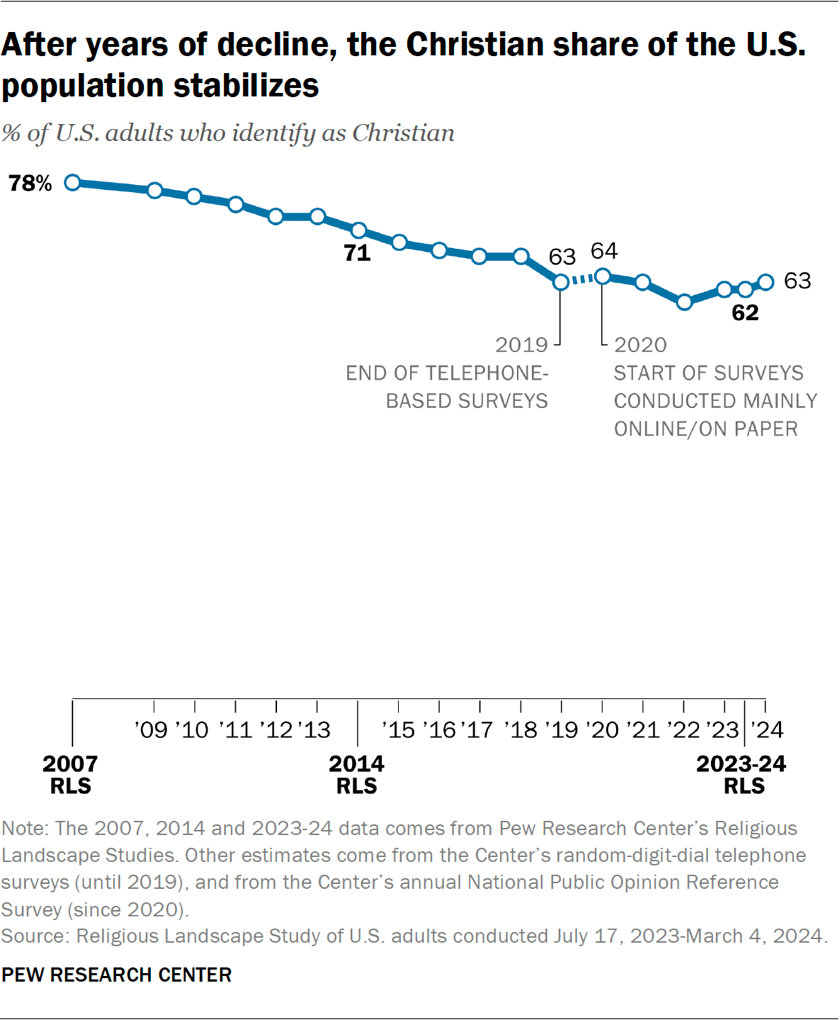
According to Pew Research, the number of Christians in the U.S. may finally stop declining. After years of consistent decline, the percentage of Americans who identify as Christian appears to be stabilizing, at least for now. A large new Pew Research Center survey of 36,908 adults found that just over six in ten Americans still identify as Christian, suggesting the trend may be slowing rather than continuing downward.
2. What Percentage of Americans are Members of a Church?
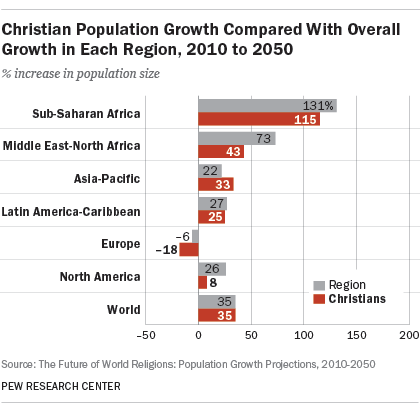
This may be a surprise, but Christianity is growing around the world and is growing faster than the rate of population. From 2020 to the mid-point of 2024, the world’s population is expected to grow from more than 7.84 billion people to more than 8.11 billion, a 0.87% growth trend.
The number of Christians worldwide is expected to climb from more than 2.52 billion to 2.63 billion, a 1.08% growth. The Christian population is projected to top 3 billion before 2050. So overall, church membership will see a drastic increase.
3. Engagement Is the New Church Attendance
Some church leaders are shifting away from using attendance as the primary metric for growth and looking to engagement instead.
Key Statistics:
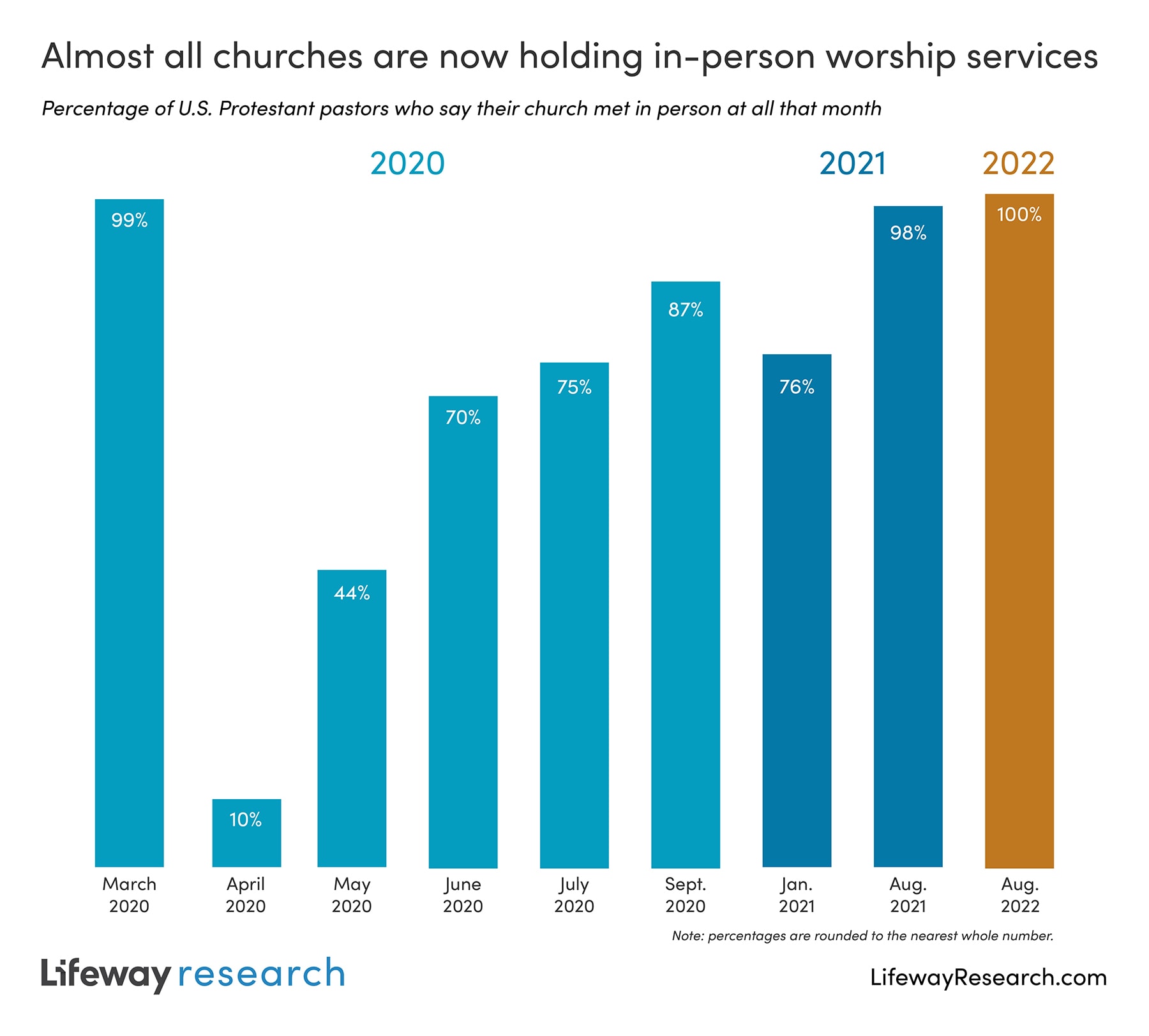
- Churches are still recovering from pre-pandemic attendance losses (Lifeway Research)
- On average, churches are at 85% of their pre-pandemic attendance level (Lifeway Research)
- Because of reduced attendance rates, 68% of churches have congregations of fewer than 100 people, including 31% who have fewer than 50 (Lifeway Research)
- Smaller churches were more likely to report being at or near their previous attendance rates (Lifeway Research)
4. 2025 Church Attendance Stats
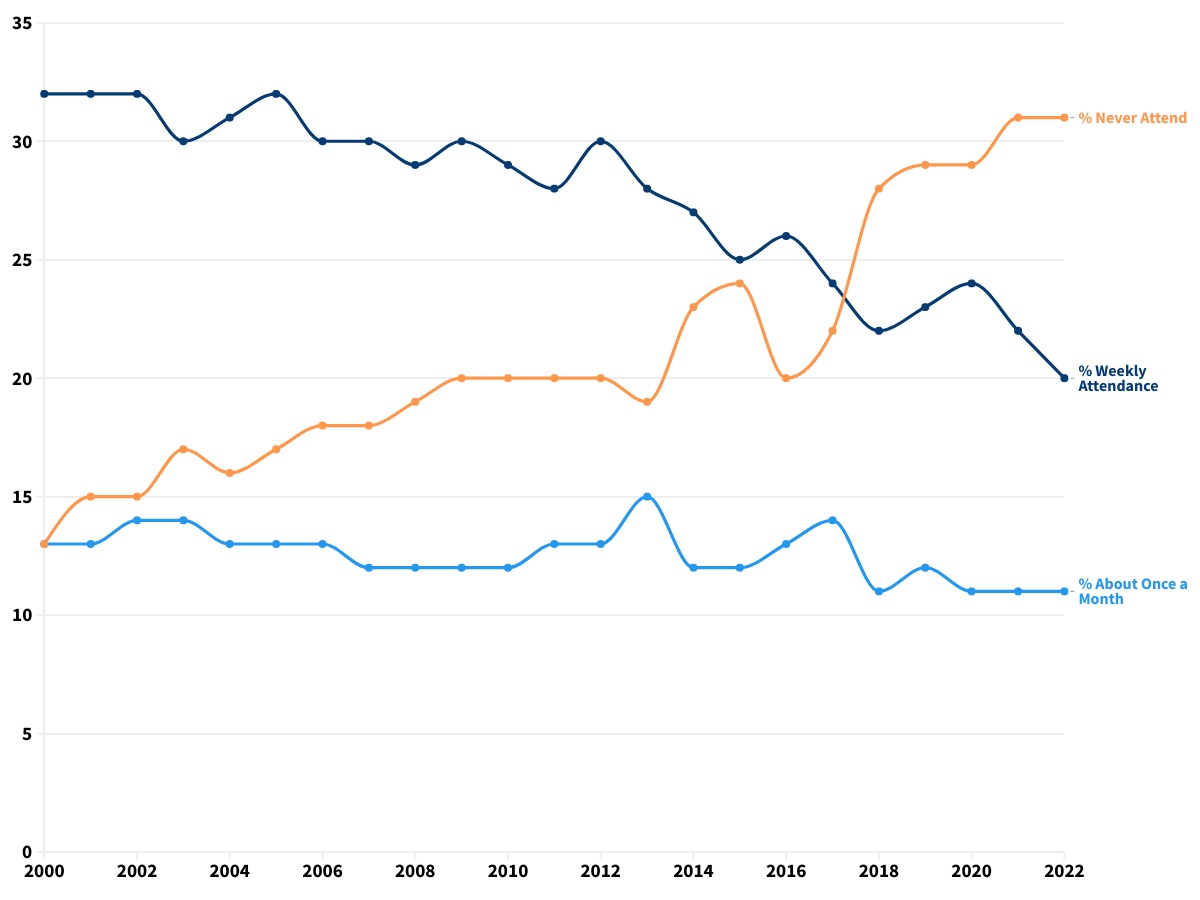
According to the source, church attendance has generally gone down. What counts as regular church attendance depends on how you define it. If regular means weekly, only 20% of Americans attend church that often, down from 32% in 2000. If the bar is lowered to once a month or more, attendance rises to 41%. That still means the majority of Americans attend services rarely or not at all.
Key statistics include:
• 20% of Americans attend church weekly
• 41% attend at least once a month
• 57% attend seldom or never
• Overall church attendance has steadily declined since the early 2000s
5. Gen Z Attends Church More Than Any Other Generation

Millennials and Gen Z Christians are attending church more often than before and at higher rates than older generations. Gen Z churchgoers now attend about 1.9 weekends per month, with Millennials close behind at 1.8, marking the highest levels Barna has recorded for young adults.
While overall church attendance remains less frequent than many pastors hope, Barna notes this upward trend among younger Christians is unusual and encouraging. Historically, older adults have been the most consistent attendees, making this shift a positive sign that spiritual renewal is taking root among Gen Z and Millennials.
6. What Does Gen Z Look For in Church?
According to Missional Marketing’s study of non-churchgoing young adults ages 18 to 30, Gen Z is primarily looking for faith that feels relevant to everyday life and makes a real impact in the world. They want a church and community that offers direction while also addressing real needs around them.
What draws Gen Z to church goes beyond basic theology. They are more interested in topics that intersect with their lived experience, including mental health, doubt, identity, purpose, social justice, and environmental concerns.
Key trends from the study show this clearly. About 78% of non-churchgoing Gen Z adults want churches that help the poor. Roughly 72% say they have doubts about God’s existence. Nearly 74% are looking for churches that address mental health, and about 69% want opportunities to actively help others.
7. Church Attendance Has Doubled For Young Adults Since Pandemic

For years, Boomers and older adults were the most consistent churchgoers. That pattern has changed. Today, Gen Z and Millennials, often assumed to be disengaged from faith, now lead in regular church attendance.
Data shows steady growth among these younger generations. In 2020, they averaged about one weekend per month in attendance. Today, that number has nearly doubled, adding almost an extra weekend per month in just five years. Earlier spikes in Gen Z attendance reflect when only the oldest Gen Z adults were included in surveys, whose habits closely mirrored those of their parents.
8. Millennials Attend Church More Than Older Generations
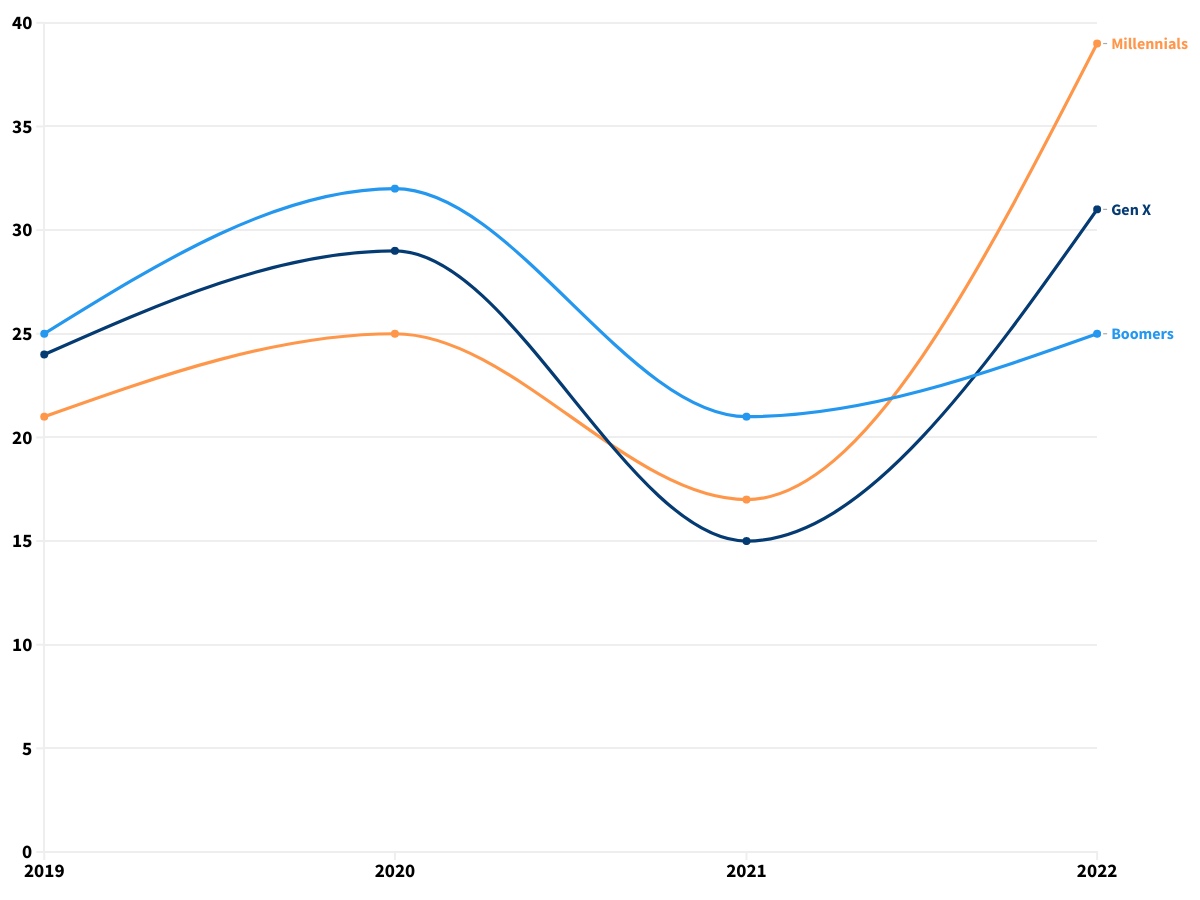
According to Barna’s recent State of the Church report, 39% of Millennials now attend church weekly. This marks a notable increase from previous years and puts Millennial attendance above both Generation X and Boomers, who historically attended more consistently than younger adults. While many churches have not fully returned to pre-pandemic levels, leaders are reporting the return of former members along with a rise in new guests.
9. Church Attendance Declines for Most Denominations
For many years, mainline Protestant denominations saw steep membership losses while evangelical churches largely held steady or grew. Between 2000 and 2015, groups like the Presbyterian Church USA, the Episcopal Church, and the United Church of Christ lost around 40% of their members, while evangelical churches saw modest growth in the early 2000s.
That trend has since reversed. Today, church attendance is declining across nearly all denominations, including conservative evangelical churches, reaching historic lows nationwide.
10. Non-Denominational Churches See Attendance Growth
The source tells us that nondenominational churches stand out as one of the few areas of growth in recent years. According to the U.S. Religion Census, there are about 6,000 more nondenominational churches in North America than in 2010, along with an increase of roughly 6.5 million people in attendance. While some individual congregations are growing, overall church participation in the U.S. continues to decline.
11. Spiritual Beliefs Are Widespread
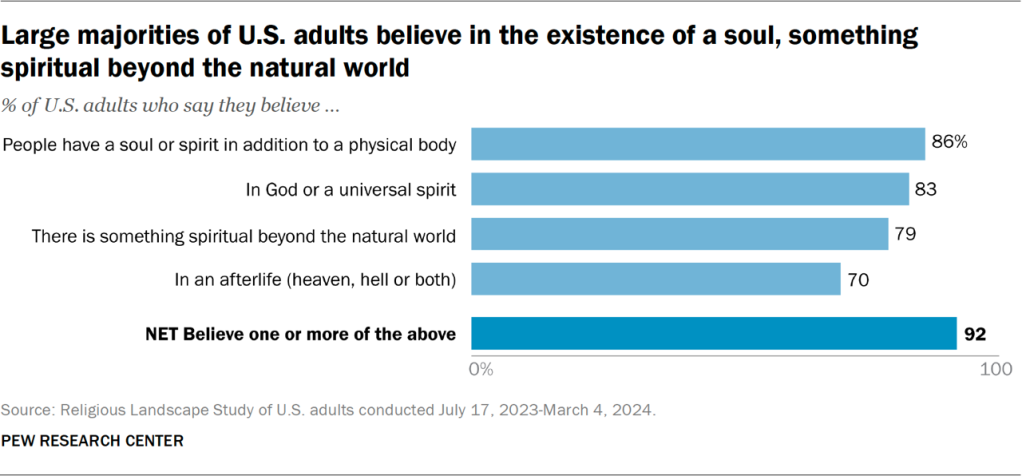
The Pew Research survey also reveals that most Americans continue to hold spiritual or supernatural beliefs. A strong majority believes that people have a soul or spirit beyond the physical body. Many also say they believe in God or a universal spirit and agree that there is more to reality than what can be seen. A significant number still believe in an afterlife, including heaven, hell, or both.
12. Young Americans Are Less Religious Than Older Generations
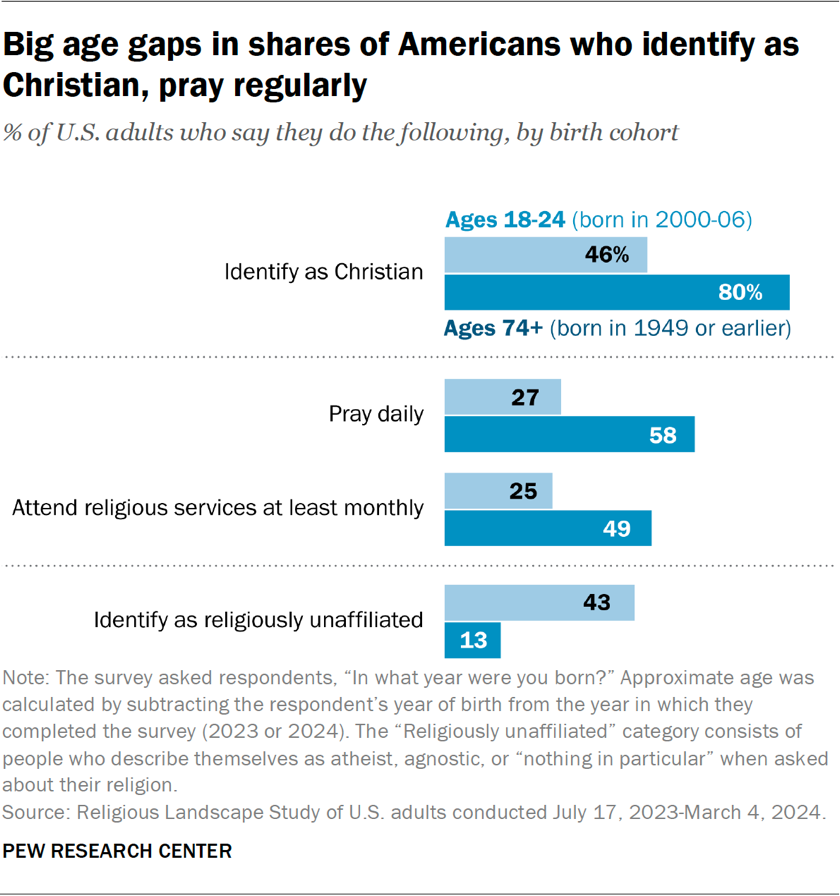
The data also highlights a clear generational gap. Younger Americans are far less religious than older adults across nearly every measure. Adults ages 18 to 24 are much less likely than those 74 and older to identify as Christian, pray daily, or attend religious services on a regular basis. At the same time, younger adults are significantly more likely to say they are religiously unaffiliated.
The survey also shows that fewer young Americans were raised in religious households compared to older generations. And even among those who did grow up in religious homes, a smaller share have continued practicing their faith into adulthood. This points to a long-term shift in how faith is passed down and maintained across generations.
13. The Spirituality Gap Between Generations is Smaller
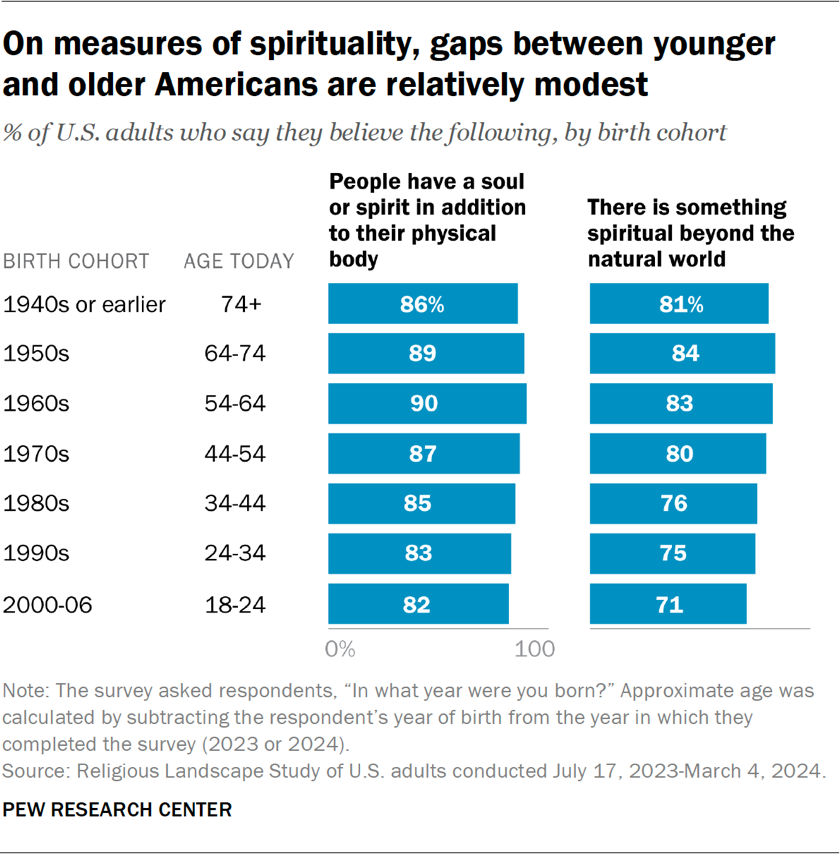
According to the source, when it comes to questions about spirituality, the differences between age groups are much less pronounced. Across every age range, at least eight in ten adults say they believe people have a soul or spirit beyond the physical body.
Belief in a spiritual reality beyond the natural world also remains strong among younger adults. Around seven in ten adults ages 18 to 24, and roughly three quarters of those ages 25 to 34, say there is something spiritual beyond what we can see. That is only slightly lower than the share of adults 74 and older who hold the same belief.
14. The Gender Gap is Narrowing
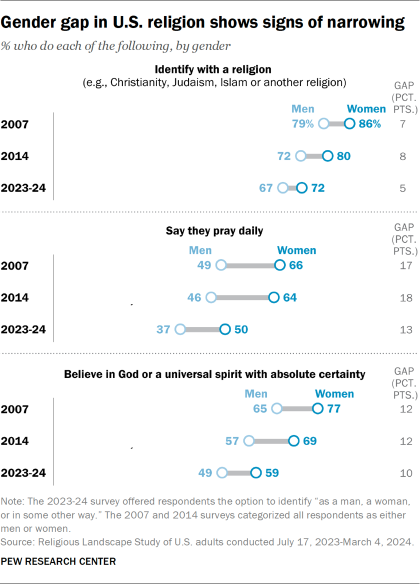
Some recent reports suggest young men may be more religious than young women, which would be a major shift from the past. Historically, women in the U.S. have consistently been more religious than men. The new survey does not show a full reversal, but it does suggest the gap is narrowing among younger adults.
Women still report higher levels of religious belief and practice overall, including prayer. However, the difference is much smaller among younger adults than among older generations. For example, daily prayer rates among adults ages 18 to 24 are nearly the same for men and women, while the gap is much wider among older adults. Even so, in every age group, women remain at least as religious as men.
15. Americans Raised Religious More Likely to Remain Religious
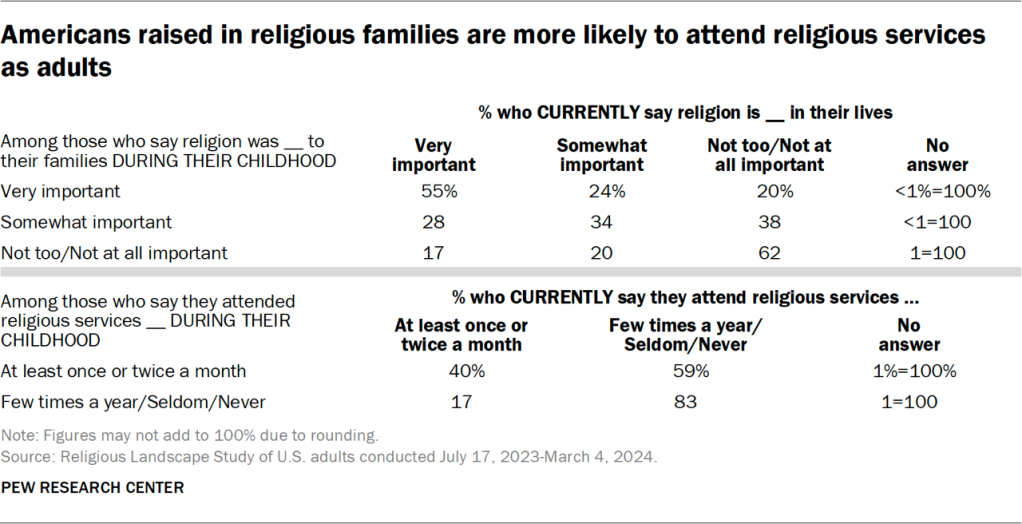
The survey shows a strong link between religious upbringing and adult faith. People raised in religious homes are far more likely to remain religious later in life. Over half of those who grew up in families where religion was very important still say it is very important to them today, compared to just 17% of those raised in less religious households.
The same pattern appears with church attendance. Adults who attended services regularly as children are more than twice as likely to attend regularly now. Those raised in highly religious homes were also much more likely to keep their childhood faith, while people raised with little religious involvement were far more likely to leave religion altogether or switch beliefs as adults.
16. Americans Raised Christian No Longer Identify as Religious
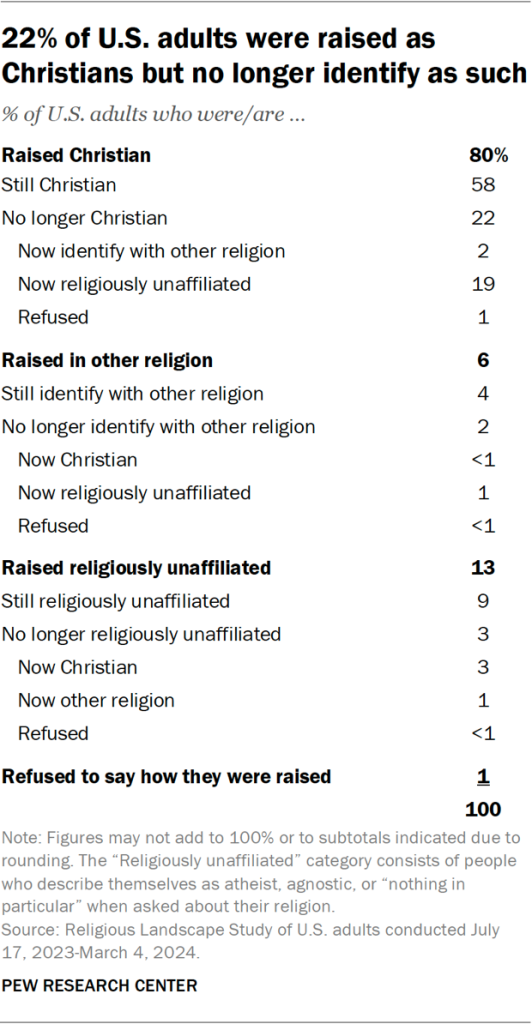
According to Pew Research, about 35% of U.S. adults say their current religious identity is different from how they were raised. This includes people who switched between Christian traditions, moved between non-Christian religions, or shifted in or out of religious affiliation altogether. That share is similar to what Pew found in 2014. When simplified into three groups, Christianity, other religions, and no religion, the trend is clear: Christianity loses far more people than it gains. While 80% of Americans were raised Christian, 22% of all U.S. adults no longer identify as Christian today.
17. American Spirituality Soars as They Age
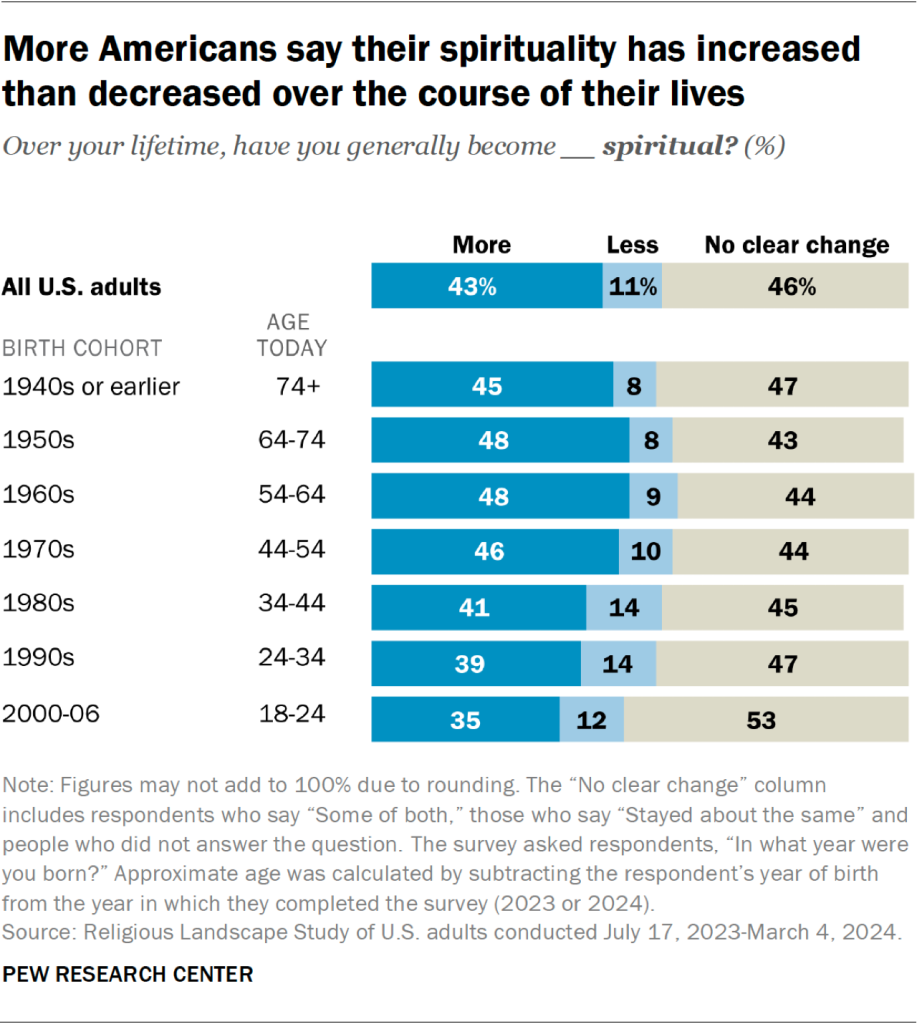
According to the source, more Americans say they have become more spiritual over time than less spiritual, by a wide margin of 43% to 11%. This pattern holds across all age groups. Most Americans also believe people have a soul, that there is a spiritual reality beyond the natural world, and that an afterlife exists. While younger adults are less religious by traditional measures, the differences are much smaller when it comes to basic spiritual beliefs.
18. Many Leave the Church Every Day
Before the pandemic, about 3,500 people were leaving churches each day, totaling roughly 1.2 million per year. Experts note that most churches should expect an annual attrition rate of 10% to 15%. That decline accelerated during lockdowns, and many churches are still rebuilding.
While some former members are returning and new guests are attending, the average church remains at about 85% of its pre-pandemic attendance. Ongoing disruption makes it difficult to measure current attrition accurately, and it may take another year or two to fully understand what was lost and regained.
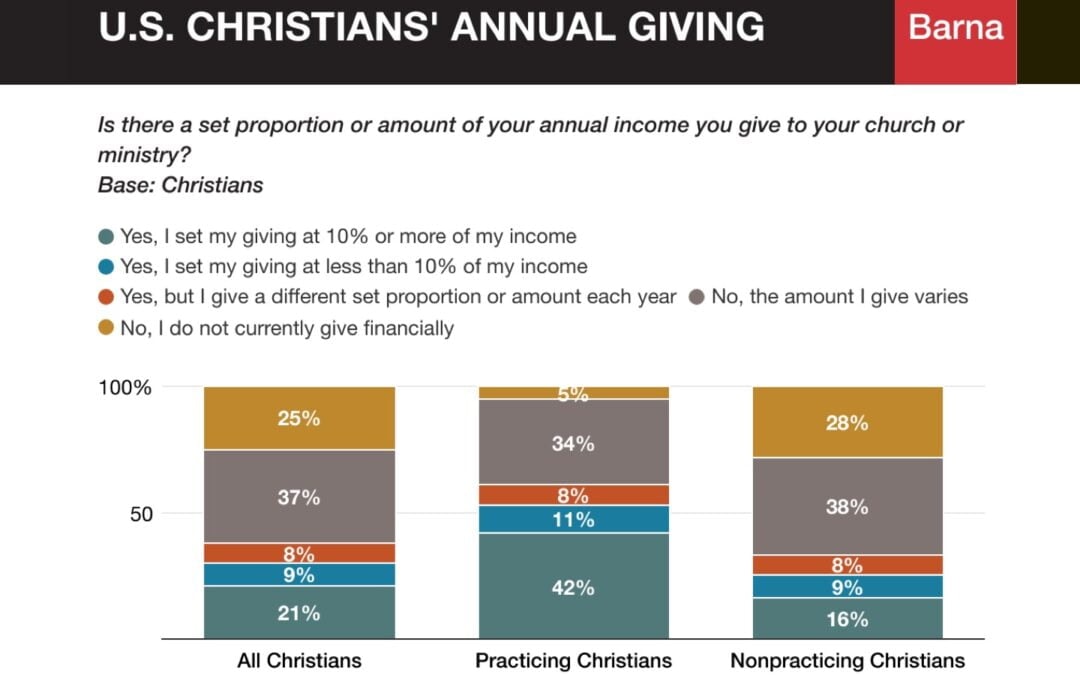
19. Decrease in Tithing
The decrease in tithing, with an average of only $17 per week and a significant portion of churchgoers not contributing financially, presents a significant challenge for church funding. This trend necessitates a reassessment of how churches approach stewardship and giving.
20. Regular Tithing is low
Only 10-15% of an average congregation tithes regularly.
Converting church attendees into regular tithers can be tricky, and this number is lower than most church leaders want to see.
21. Reported Giving Amounts
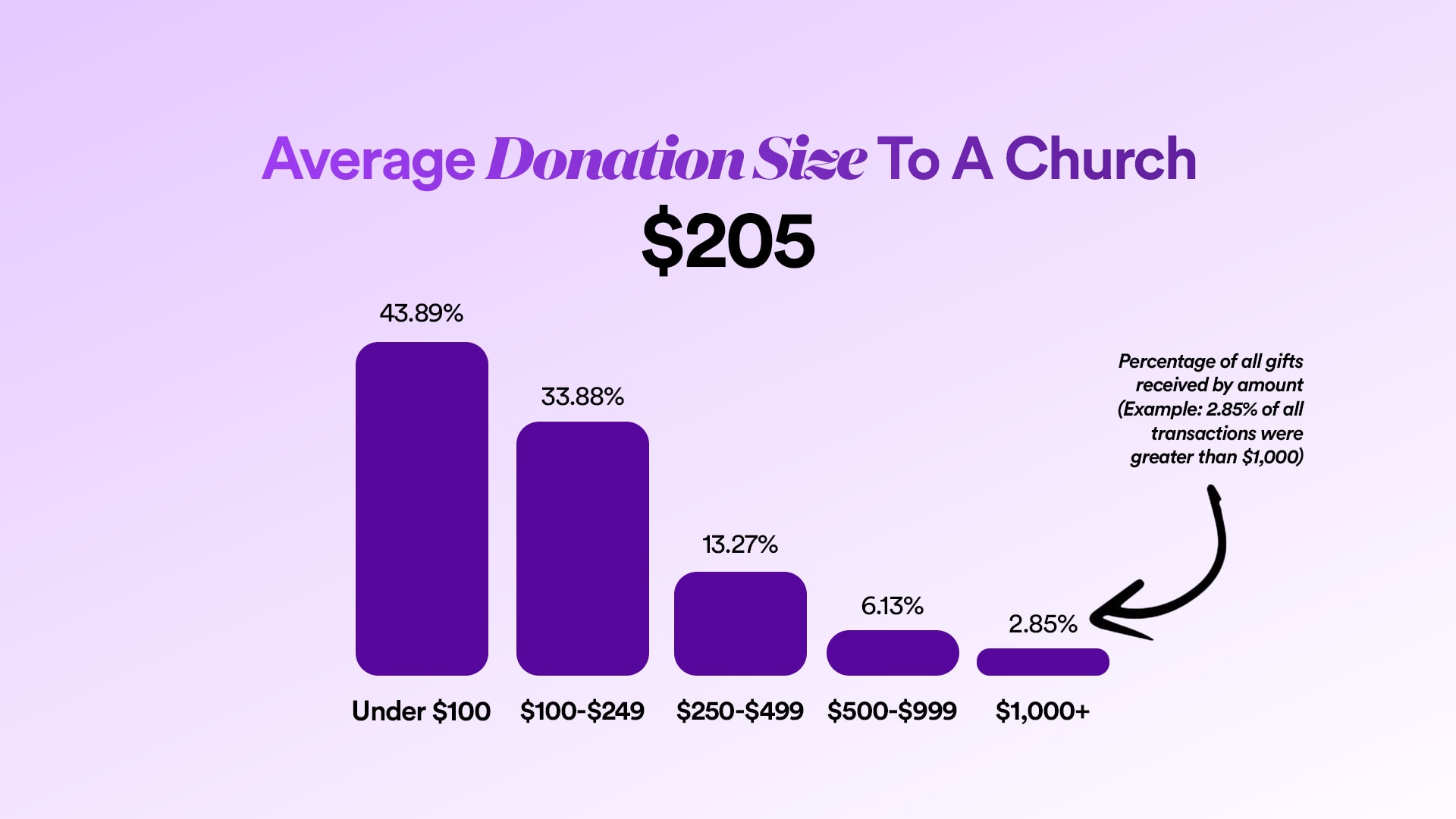
Nucleus has done research and found that the average donation size is roughly $205, with 77% of donations polled being given only yearly. And no surprise, the month that people give the most is December.
22. Average Age of Senior Pastors
The demographic profile of senior pastors in the U.S. reveals an average age of roughly 51. With the majority being male, this statistic raises questions about diversity and generational leadership within church communities.
23. A Quarter of Parents Bring Kids to Church
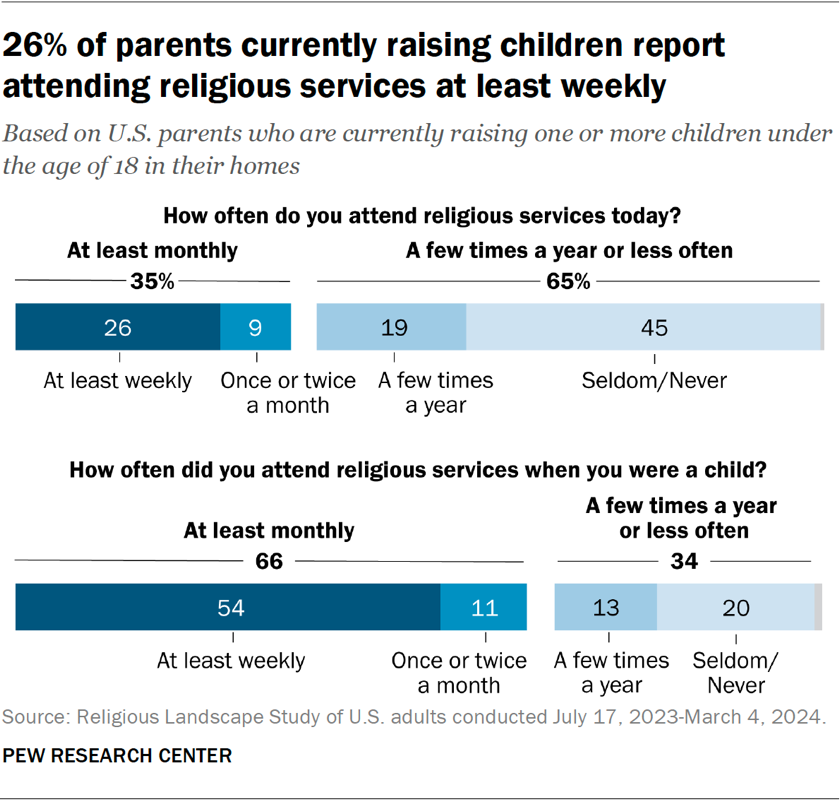
Overall, 26% of parents say they attend religious services weekly, with another 9% attending once or twice a month. While the survey did not ask whether children attend with their parents, even if all of these families did, it would still fall well below the roughly two-thirds of parents who say they attended religious services at least monthly during their own childhood.
24. The Majority of Americans Still Believe That Church is an Important Part of Christmas
Despite shifts in church attendance patterns over the years, the significance of church during Christmas remains strong in the American psyche. Major holidays, especially Christmas, continue to draw people into churches. A recent study by Lifeway Research reinforces this tradition, revealing that a significant 63% of Americans still view attending church services as an integral part of their Christmas celebration.
Previous Editions of Church Statistics You Should Know
Church Stats 2025
Church Stats 2024
Church Stats 2023
Church Stats 2022
Church Stats 2021
Church Stats 2020
Church Stats 2019
Looking Ahead to 2026

These statistics provide rich insights into the past few years and what we can expect in 2026. Every city, state, and church is going to have different stats, so we hope that you’ve found your church amongst this information. One thing always remains true: Jesus is King, and we will continue to welcome new Christians each year into the Kingdom of God!
Tell us what you’re looking forward to at your church in 2026!