Google Workspace for Nonprofits is free for nonprofits Google can verify, and churches qualify. You get email at your church’s domain, shared Drive storage, Meet, Calendar, and Google’s Gemini app for $0 per user per month (Google, verified November 5, 2026).
So “will Google take a church?” has an easy answer: yes, and Google’s own help center names churches. The harder part is passing two checks, Google’s nonprofit verification and then Google’s review of your domain. The second one is where a church is most likely to stall, because it depends on things like who holds the login for your domain.
Below: which plan to pick, how to activate it, how to move volunteers off personal Gmail, and how to set up shared drives so church files stay with the church.
Before you start: if your church has never received an IRS determination letter (many haven’t, because churches are tax exempt automatically), read how to prove your church is a nonprofit first. Google requires IRS recognition or a group exemption, and that post shows you which documents get a church through.
What does Google Workspace for Nonprofits include?
Google Workspace for Nonprofits includes the full set of Google apps (Gmail, Drive, Meet, Calendar, Chat, Docs, Sheets, Slides, Keep, Sites and Forms) on your church’s own domain at $0 per user per month. Google’s plan page lists 150-participant video meetings, 100 TB of storage shared across all users, security controls and standard support for the free edition (google.com/nonprofits, verified November 5, 2026).
Three paid editions sit above the free one, all discounted for nonprofits. Here’s what each one costs a church as of November 2026.
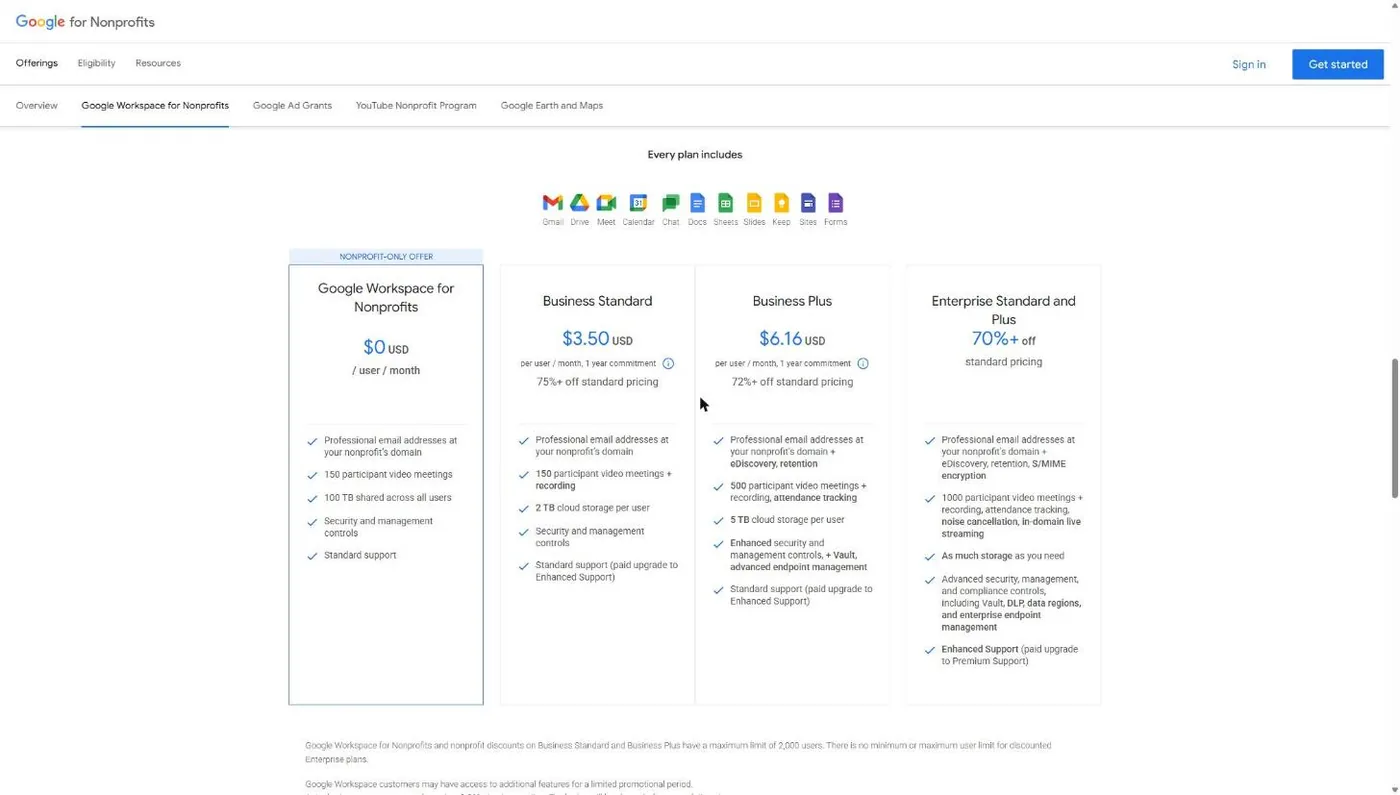
| Plan | Nonprofit price | Storage | Meet | What it adds for a church |
|---|---|---|---|---|
| Workspace for Nonprofits | $0 | 100 TB shared by everyone | 150 people | Everything a normal church office uses, plus the Gemini app and NotebookLM |
| Business Standard | $3.50/user/mo, 1-year commitment, or $4.20 billed monthly ("75%+ off") | 2 TB per user | 150 + recording | Meeting recording; Gemini inside Gmail, Docs and Meet |
| Business Plus | $6.16/user/mo, 1-year commitment, or $7.40 billed monthly ("72%+ off") | 5 TB per user | 500 + attendance tracking | Vault for email retention and eDiscovery, stronger device controls |
| Enterprise Standard and Plus | "70%+ off" standard pricing (no dollar figure listed) | "As much storage as you need" | 1,000 + in-domain live streaming | Data loss prevention, data regions, Enhanced Support. Built for large multi-site churches. |
The free edition and the Business Standard and Plus discounts carry a 2,000-user maximum. Google says there is “no minimum or maximum user limit” on discounted Enterprise plans (Google Workspace for Nonprofits page, November 2026). Google also says the nonprofit discounts are available only through Google, not through a reseller, so a church that bought Workspace through its IT vendor has to move billing to Google to get the price (Google Workspace Help, “Upgrade from Google Workspace for Nonprofits”).
Does Google Workspace for Nonprofits include Gemini and NotebookLM?
Yes. The free Workspace for Nonprofits plan includes the Gemini app and NotebookLM at no cost, according to Google’s help article “10 new Google AI features included in Google Workspace for Nonprofits” (support.google.com, checked November 5, 2026). Google’s edition page describes it as the “Gemini app with enterprise-grade data protections.” Some of Google’s newer pages call NotebookLM “Gemini Notebook.”
Here is the limit, stated plainly: Gemini inside Gmail, Docs, Sheets, Drive and Meet is not on the $0 plan. Google calls that “Gemini in Workspace,” and the same help article’s comparison table lists it as “Not available” on the free plan. It comes with the paid Business Standard and Business Plus editions, which is where “Help me write,” the Gemini side panel and “Take notes for me” in Meet live. Google’s pricing page doesn’t mention Gemini at all, so you only see this split in the help center.
For most church staff that doesn’t matter. Your office manager can draft the bulletin blurb in the Gemini app and paste it into Docs. For real church use cases, read Gemini for churches.
Which Google Workspace plan does a church actually need?
Most churches need the free Workspace for Nonprofits plan and nothing else. A 100 TB pool shared across your whole staff is more storage than a church office will fill with sermon notes and volunteer schedules, and 150-person meetings cover every staff meeting and most online prayer nights. Upgrade only for a specific reason, like recording staff trainings in Meet or giving your treasurer email retention through Vault on Business Plus.
The catch most churches miss: Google says, “When you upgrade, everyone in your Google Workspace account gets the same subscription” (Google Workspace Help, November 2026). You can’t put the lead pastor on Business Standard and leave 30 volunteers on the free plan. The upgrade price multiplies by every account you have:
| Accounts on the domain | Free plan | Business Standard per year | Business Plus per year |
|---|---|---|---|
| 10 (staff only) | $0 | $420 | $739.20 |
| 25 (staff + ministry leads) | $0 | $1,050 | $1,848 |
| 50 (staff + volunteers) | $0 | $2,100 | $3,696 |
Math uses Google's 1-year-commitment nonprofit prices ($3.50 and $6.16 per user per month) as of November 5, 2026. Paying monthly ($4.20 and $7.40) costs 20% more.
If you do upgrade, Google offers a Flexible Plan with “no long-term commitment” or an Annual Plan that “requires a one-year contract,” and the discount applies only after your free trial ends (Google Workspace Help, November 2026).
How do I set up Google Workspace for Nonprofits for my church?
Setting up Google Workspace for Nonprofits takes a church six steps: get approved by Google for Nonprofits, make your website pass Google’s domain review, request Workspace inside your nonprofit account, verify your domain, wait for activation, then point your email and add your people. Plan on one to four weeks start to finish, because Google quotes 2 to 14 business days for the first approval alone (Google for Nonprofits Help, November 2026).
Step 1: Get your church approved for Google for Nonprofits
Workspace is one of several products you unlock after Google approves your church. You apply at google.com/nonprofits, click Get started, and Goodstack, Google’s validation partner, checks your nonprofit status. Goodstack says it processes applications within 72 hours, and Google says its review typically takes 2 to 14 business days. Our full walkthrough of the application is in Google for Nonprofits: how churches apply, and what Goodstack is and how it verifies churches covers the verification side.
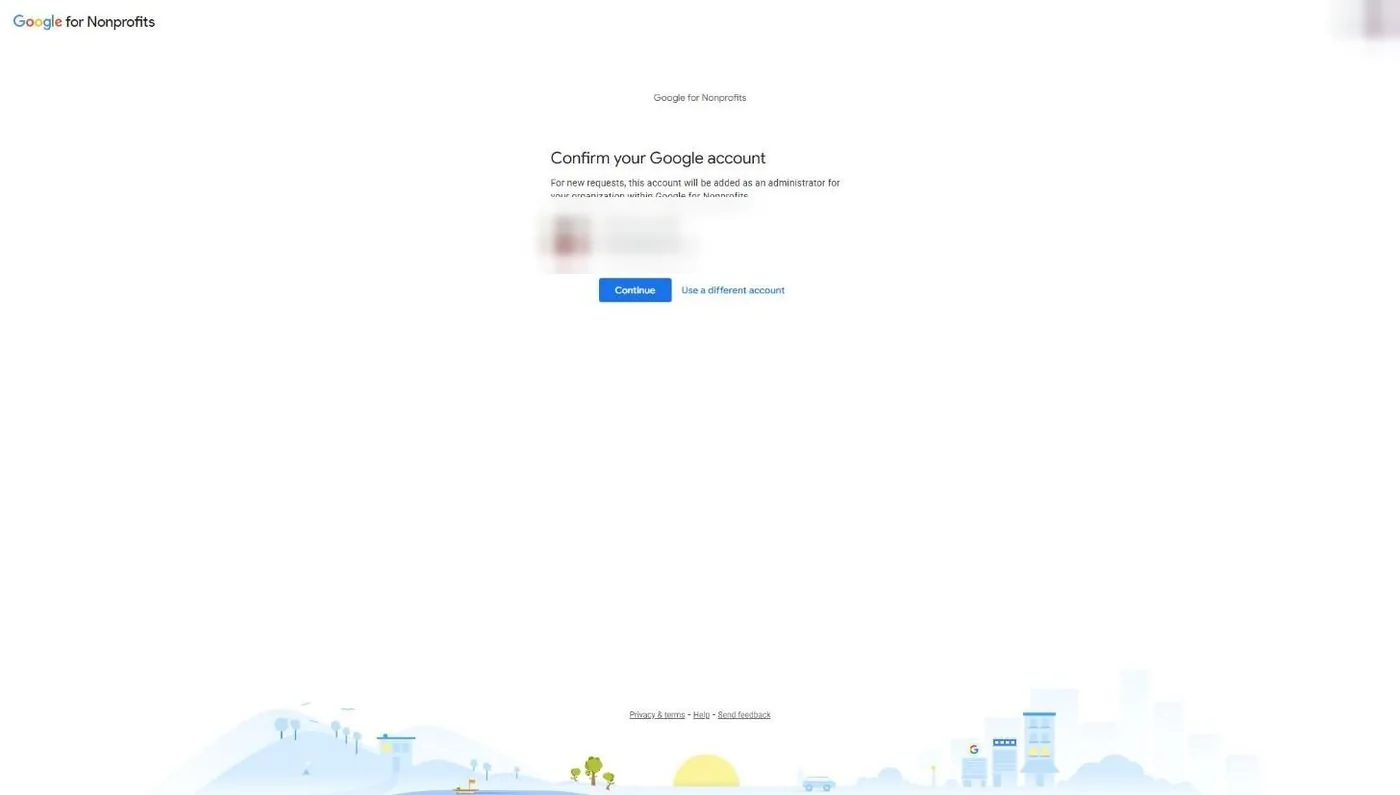
Common snag: the pastor applies from a personal Gmail. That account becomes the administrator of your church’s Google nonprofit account, and Goodstack may ask for a signed letter confirming your role. Apply from a church address if you have one.
Step 2: Make sure your church website passes Google’s domain review
Google reviews your website before it activates Workspace. Its activation article lists three things: the site must be fully working (not a “Coming Soon” or “Under Construction” page), it must clearly connect to your registered nonprofit by name, acronym or branding, and it should show details like a physical street address or a clear mission statement (Google for Nonprofits Help, Workspace activation steps, November 2026).
Common snag: the church’s legal name is “First Baptist Church of Springfield, Inc.” and the website only says “Springfield Church.” Add your legal name and street address to the footer before you submit.
Step 3: Request Workspace inside your Google for Nonprofits account
Sign in at google.com/nonprofits with your administrator account. Under Google Workspace for Nonprofits, click Get started. Google asks whether you already use Google Workspace.
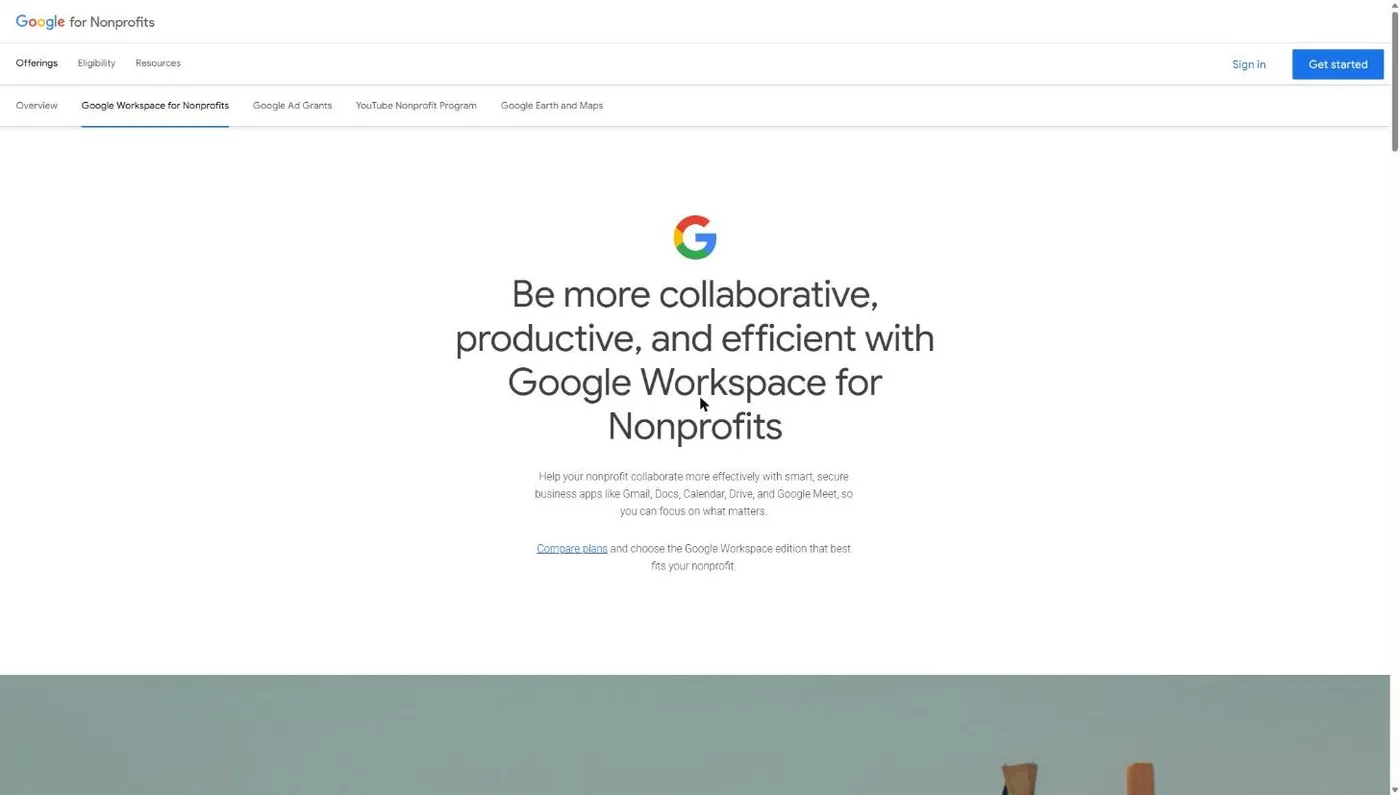
- If you don’t use Workspace yet, Google links you to “a 14-day trial of Google Workspace for Nonprofits at no charge.” Sign up for that trial with your church’s domain.
- If you already pay for Workspace, choose “Yes, we currently use Google Workspace” and enter your domain. Google checks your current edition and shows the nonprofit offers your domain qualifies for. You keep your existing accounts, email and files.
Common snag: Google for Nonprofits and Google Workspace are separate accounts, often with different administrators. The person approved in Step 1 may not be an admin of your existing Workspace. Sort out who holds both before you start.
Step 4: Verify that your church owns its domain
Domain verification happens at your domain registrar (GoDaddy, Cloudflare, Squarespace Domains or wherever your domain lives), not inside Google. You sign in to the Workspace Admin console, open the setup tool, copy the verification code, and add it to your domain’s DNS records. Google says adding the record “takes about 10 minutes” and it “can take up to one hour” to confirm (Google Workspace Admin Help, “Verify your domain for Google Workspace”).
Watch the clock. Google says you “must verify your domain within the first 9 days of your free trial period,” and an unverified account without an active paid subscription is “automatically deleted within 21 days of signup.”
Common snag: a volunteer bought the domain years ago on a personal card, and nobody on staff has the registrar login. Find it before Step 3, not during the trial. Our post on why your church domain name matters explains why the church, not a person, should own it.
Step 5: Submit your domain and wait for activation
Once the trial is running and your domain is verified, go back to your Google for Nonprofits account, submit the domain, and click Activate. Google says its review “can take several days,” and its trial-ended article puts resubmitted requests at 3 to 7 business days. You get an email either way. If the trial runs out before you submit, Google’s help center says the usual cause is that you “did not submit your Google Workspace domain to be activated.”
Step 6: Point your email and add your people
Your email doesn’t move to Google until you change your domain’s MX records to Google’s mail servers, and Google’s quick-start guide also recommends an SPF record so your mail doesn’t land in spam (Google Workspace Quick Start Guide for nonprofits). Make that change on a Monday morning, not Saturday night, so a lost email doesn’t cost you a wedding inquiry over the weekend.
Then add accounts. Google’s quick-start guide says to “Add accounts for all employees and volunteers.” Set up shared addresses like info@ as Google Groups that deliver to the right people, not as one person’s inbox, and turn on 2-Step Verification for every account, starting with whoever handles giving data.
A church email address belongs to the church, not to the person using it.
If your worship leader books musicians from a personal Gmail, every contact and contract walks out the door when he does. Google Workspace for Nonprofits costs a verified church $0, so there is no budget reason left to run ministry on personal accounts.
How do I move church volunteers off personal Gmail?
Google Workspace includes a data import tool that copies email from a personal Gmail account into the volunteer’s new church account. A super administrator starts it in the Admin console under Data, then Data import and export, then Data import, and the volunteer approves the request from their Gmail (Google Workspace Help, “Import email from a Gmail account”). Google says the tool moves email only, not Drive files, calendar events or contacts.
That last detail shapes the plan. Move each volunteer in three passes:
- Email first. Run the data import tool for anyone with real ministry history in their personal Gmail, like your kids ministry lead or your volunteer coordinator.
- Then files. Have the volunteer share their ministry folders with their new church account. From the church account, make copies into the right shared drive. Copies belong to the church. Shared links still point at the personal account.
- Then contacts and calendars. Export contacts from Gmail and import them into the church account, and re-create recurring events (rehearsals, check-in shifts) on a ministry calendar owned by the church.
Who gets an account? I’d give one to anyone who touches church data (staff, ministry leads, your treasurer, your kids check-in coordinator), not every member. That keeps you well under Google’s 300-user starting cap.
How should a church set up shared drives?
Shared drives are Drive folders owned by the church instead of by a person, and they are included in the free Nonprofits edition. Google’s admin guide says files in shared drives are owned by the organization and stay put when the person who created them leaves. Files in a personal My Drive are different: they go with the user’s account, so if an admin deletes a departed staffer’s account without transferring the files, they’re gone once Google’s 20-day window to restore a deleted user runs out (Google Workspace Admin Help, November 2026).
That’s the whole argument. Build one shared drive per ministry and add people by role:
- Admin and Office (staff only): bulletins, calendars, building use.
- Finance (treasurer and executive pastor only): giving records live here and nowhere else.
- Kids Ministry (kids staff and leads): curriculum, check-in rosters, background check tracking (keep that last one in a restricted folder).
- Worship and Production (worship pastor and tech team): chord charts, service plans, stage plots.
- Communications (whoever runs the website, social and the weekly email).
If your team also needs chat and task tools on top of Drive, our roundup of church team communication tools compares the options.
How many users can a church have on Google Workspace for Nonprofits?
A church can have up to 2,000 users on the free Workspace for Nonprofits plan, but a new account starts at 300. Google’s Nonprofits edition page says new accounts “can add up to 300 users,” and you request more through Google Workspace support in the Admin console. The 2,000 cap also covers discounted Business Standard and Plus (Google, November 2026).
New accounts can also add up to 4 secondary domains, so a youth ministry or school domain can live in the same account. Google only activates the nonprofit edition on your primary domain, though, so submit your main church domain, not the ministry one.
What if Google won’t activate Workspace for your church?
Most Google Workspace for Nonprofits rejections come from the domain, not the church. Google’s help center lists specific errors for ineligible domains, unverified domains, domains that already have a Workspace account, and lapsed trials, and each one has a direct fix. Here are the ones a church is most likely to hit, with what to do.
| What Google says | What it usually means at a church | Fix |
|---|---|---|
| Google for Nonprofits not approved | No IRS letter, or a denomination church applied with the parent's paperwork only | Google says group exempt organizations "must supply their own EIN" plus group exemption documentation. See proving nonprofit status. |
| "Ineligible domain" | You submitted a ministry domain, or the Workspace account was canceled | Google: "Only active Google Workspace domains can be upgraded." Submit the active primary domain and resubmit from your nonprofit account. |
| "Domain not verified" | The DNS record never got added at the registrar | Find the registrar login, add the verification record at your registrar, then finish the Workspace activation steps in your Google for Nonprofits account. |
| "A Google Workspace account for your domain already exists" | A former staffer or volunteer set up Workspace years ago | Google's activation troubleshooter covers this error. Find out who set up the old account and recover it; that is usually faster than fighting it. |
| "Trial period ended" | You verified the domain but never submitted it for activation | Sign in at google.com/nonprofits, click Get started under Workspace, and submit the domain. Google reviews it in 3 to 7 business days. |
| More information requested | The website doesn't clearly match your legal name, or it's a placeholder page | Add the legal name, street address and mission to the site, then reply with the page link. |
What changed since we first wrote about Google Workspace for churches?
The free plan got better and the paid upgrades got slightly more expensive. When this post first ran (it also absorbs our 2021 G Suite guide), the free edition listed 100-participant meetings and 30 GB per user, and Business Standard cost $3.00 per user per month. As of November 5, 2026, Google lists 150-participant meetings, a 100 TB pool shared across all users, the Gemini app and NotebookLM on the free plan, and $3.50 for Business Standard.
How does Google Workspace connect to the Google Ad Grant?
Google Workspace and the Google Ad Grant come from the same Google for Nonprofits account, but you activate each one separately. Google Ad Grants gives eligible nonprofits “$10,000 USD of in-kind advertising every month for text ads” (Google, November 2026). Once Workspace is running, the Ad Grant is the next product most churches should turn on, because it puts your church in front of people searching for a church in your town.
The Ad Grant has its own rules and its own setup. Our Google Ad Grant guide walks through it, and if you’d rather have a team run it, that’s what our Google Grant management service does.
Frequently Asked Questions
Workspace is free. The Ad Grant is $10,000 a month. Do you qualify?
The same Google for Nonprofits approval that unlocks Workspace opens the door to Google Ad Grants. Answer a few questions and find out in about two minutes whether your church is likely eligible, and what to fix if it isn't.
Related guides
- Nonprofit software discounts for churches: who accepts churches and who doesn’t
- How to prove your church is a nonprofit to a software vendor
- Google for Nonprofits: how churches apply
- What is Goodstack? How churches get verified
- Microsoft 365 for Nonprofits after the free grant ended
- Gemini for churches: cost, setup and real use cases