Starting a church comes down to six steps: define your identity, build a visual brand, launch a website, handle the legal and tax paperwork, build outreach that brings people in, then track what’s working. Get your identity and the paperwork right first, since your website, your first outreach event, and your first offering all build on top of those two. The checklist below walks through each step in order, including the federal tax basics and your state’s paperwork, and what to do if you don’t have a building yet.
Legal and Tax Basics for a New Church

The IRS sets no minimum membership. If you incorporate, your state sets the rules. Texas requires at least three directors, a president and a secretary, and Hawaii requires at least three directors. Members are optional. Write bylaws that set out how the church is governed and keep them in your own records (Texas, for one, doesn’t file them). Be sure ahead of time you’ve got willing participants to fulfill the various procedural and accounting roles necessary to make a church run smoothly.
A major component of being a church is having an official name and location. We’ll talk more about this later on, but having a name is important when filling out all of the required forms.
It is possible to incorporate and request IRS recognition without a lawyer, but it’s not the easiest process in the world and it would be beneficial to consult a lawyer after preparing the paperwork to the best of your abilities. Always get your work double-checked, but try to save money by doing as much of it as possible yourself.
What Counts for Federal Tax Purposes
- The organization must be organized and operated exclusively for religious, educational, scientific, or other charitable purposes.
- Net earnings may not inure to the benefit of any private individual or shareholder.
- No substantial part of its activity may be attempting to influence legislation and may not intervene in political campaigns.
- The organization’s purposes and activities may not be illegal or violate fundamental public policy.
If you incorporate, file articles of incorporation with your state’s business filing office. Texas’s nonprofit filing FAQ covers Form 202, and Hawaii’s DCCA Form DNP-1 costs $25. If you’ve already configured your corporate offices, composed a belief statement, and met the proper requirements, you’re halfway there!
To get IRS recognition, file Form 1023 electronically at Pay.gov. The user fee is $600. Churches that meet the 501(c)(3) requirements are automatically considered tax exempt and aren’t required to apply for IRS recognition.
- It’s not necessary to take any extra steps to ensure tax exemption. Many churches still apply, because IRS recognition assures leaders, members and donors that the church is exempt and eligible for tax-deductible gifts. Donors can deduct gifts to a qualifying church even without it.
Get an EIN. Apply free online at IRS.gov and get the number right away (Form SS-4 by fax or mail also works). Every church should have one, with or without employees, and your bank will ask for it. Apply after the church is legally formed.
- Find this form here: https://www.irs.gov/businesses/small-businesses-self-employed/get-an-employer-identification-number
Open a church bank account. Use your EIN and other documentation to open an account used specifically for the church’s funds. Banks set their own requirements. Most ask for:
- Proof of your EIN
- Photo ID, and social security numbers of the principal signers
- Master list of the church’s board of directors and corporate officers
Step 1: Define your church’s identity
This is a crucial step when you begin starting a church. The identity of your church is how people will find you, perceive you, and talk about you. With your core founding members, develop your core beliefs and mission statement for your ministry. This is where you may come up with the name for your church if you haven’t already. The name is very important, and it’s good to take note of other local churches’ names in the surrounding areas so as not to copy them to make it confusing.
Use these eight steps below as a guideline for developing your church:
- Identify Your Church’s Style: Is your church traditional, contemporary, or a mix? Your worship style should resonate with your target congregation while staying true to your foundational beliefs.
- Determine the Order of Service: Outline the sequence of events, such as the opening prayer, hymns, scripture readings, sermon, and closing benediction. This helps ensure a smooth flow and keeps the service engaging.
- Select Musical Elements: Whether you have a full choir, a worship band, or simple acapella hymns, choose music that aligns with the day’s message and evokes the desired emotional and spiritual responses.
- Prepare the Message: The sermon is a focal point of most services. Pastors should invest time in studying, praying, and crafting a message that’s both biblically sound and relevant to modern lives.
- Incorporate Multimedia: Consider using visuals, videos, or slides to complement the message, especially if catering to a younger audience.
- Engage the Congregation: Incorporate interactive elements like group prayers, testimonies, or moments for reflection. This makes the service more immersive.
- Rehearse: Especially in the early stages, hold rehearsals with all participants – from the choir to the ushers. This ensures everyone knows their role and can help identify any potential issues before the actual service.
- Gather Feedback: After the service, encourage feedback from attendees. This can provide valuable insights to improve future services.
Step 2: Create a visual identity

Think of this as branding and how people view your church. This will be the color of your logo, your website and anything you put your name on that needs a certain look. Do you have several letters in your church name that can form an acronym? Put those on coffee cups, pamphlets, pens and anything you think you’ll need. Keep your branding consistent and not overly complicated.
- Evaluate Accessibility: If starting a church in your home, ensure it’s accessible to your target community, considering parking and public transportation.
- Assess Size and Capacity: Begin with a space fitting your initial congregation, but plan for future growth as your congregation expands.
- Consider Ambiance: Whether at home or elsewhere, the atmosphere should foster worship, reflection, and connection.
- Weigh Costs: Starting in a home can be cost-effective, but factor in potential expenses like seating or sound equipment.
- Ensure Safety and Compliance: Check local regulations on gatherings in residential areas, including safety standards and parking.
- Plan for Growth: If you outgrow your initial location, be prepared to transition to a larger space or venue.
Step 3: Build your online presence

A church’s online presence might not be the first thing you think of, but nowadays it’s vital. A website is where you will ask church members to visit to send in tithes, sign up for events and small groups and so much more.
Using a church website builder removes the stress and worries of creating the website. Having a great website will ultimately increase church attendance. There are so many amazing church website builders who take away the stress of building a website. Take a look at our step-by-step process of how to create a church website!
If you’re planting a new church, REACHRIGHT’s Church Plant Scholarship covers discounted web design, Local SEO, and Google Ad Grant management, so you’re not building your online presence from zero.
Step 4: Start your church legally

As mentioned before, the legal requirements are extremely important when starting a church. Some steps are optional, like IRS recognition and incorporation. Your state’s rules and federal employment-tax rules are not. While it is not the fun or exciting part of opening a church, these rules are put in place to protect you.
Every state might have slightly different requirements, so be sure to double-check these. This is where having a lawyer who understands church bylaws can come in handy to help out with all the confusing legal jargon.
The IRS website has useful information about tax requirements such as being tax exempt.
Step 5: Foster your community outreach

A major part of any new church when church planting is building up the local community. You must foster community outreach programs in order to bring members to your church. For one, you’ll need funding for buildings and staff salaries, this is where tithes come in.
- Conduct a Needs Assessment: Clearly identify your church’s immediate financial goals to guide your strategies.
- Organize Traditional Fundraisers:
- Community Events: Host bake sales, dinners, or auctions (possibly with other churches).
- Talent Shows: Showcase church member talents for a fee or donation.
- Tap into Modern Avenues:
- Crowdfunding: Use crowdfunding platforms like GoFundMe for specific projects.
- Prioritize Publicity:
- Digital Outreach: Use social media, your church website, and email newsletters.
- Local Media: Engage local newspapers or radio stations.
- Maintain Transparency: Post-fundraiser, share amounts raised, and it’s uses with your community. This trust-building step ensures future support.
- Assemble a team of foundational members to brainstorm core beliefs, visions, and missions. Try to come up with a belief statement that encapsulates your religious organization.
- Use religious doctrines and other church missions to shape your statement.
- Document your foundational beliefs, making sure they’re both aspirational and grounded in your chosen spiritual tradition.
- Host Varied Events: Diversify the activities you offer. While spiritual events like Bible study sessions are pivotal, recreational ones like picnics or talent shows can foster camaraderie and showcase diverse talents within the congregation.
- Promote Small Groups: By creating specialized circles or groups - be it for new moms, singles, or hobbyists - you’re providing an avenue for members to bond over shared experiences or interests. These intimate settings can lead to deeper conversations and connections.
- Empower Church Members: Let your congregation take the lead on certain initiatives. By assigning responsibilities or encouraging them to spearhead events, you not only lighten the leadership’s load but also give members a sense of purpose and belonging within the church.
- Establish Support Systems: Whether it’s a mentorship program or counseling services, ensure members have channels to seek support during challenging times.
Step 6: Track & measure your results

SMART goals are the key here! Make sure you have specific, measurable, achievable, relevant, and time-bound goals. The more specific your goals are in the church planting process, the better time you’ll have to complete these goals.
Once you have come up with your goals in a timeline, make sure to implement one or all of these strategies to track your results:
- Introduce Suggestion Boxes: Whether physically in the church or digitally on your website, allow members to a place to provide anonymous feedback.
- Conduct Regular Surveys: Use online platforms like SurveyMonkey to create surveys that gauge member satisfaction and solicit ideas for improvement.
- Host Town Hall Meetings: Organize monthly or quarterly meetings where members can openly discuss their concerns and suggestions or provide feedback on recent events or services.
- Review Feedback with Church Leaders: Schedule regular review sessions with the church’s leadership team to discuss feedback and decide on actionable steps.
- Implement Feedback Mechanisms for Volunteers: Ensure that there’s a separate channel for volunteers to communicate their feedback, ensuring they feel valued and heard.
- Celebrate Successes: When you make positive changes or achieve milestones based on feedback, celebrate them with the congregation, reinforcing the importance of their input.
No Building Yet? Try a Portable Church Setup
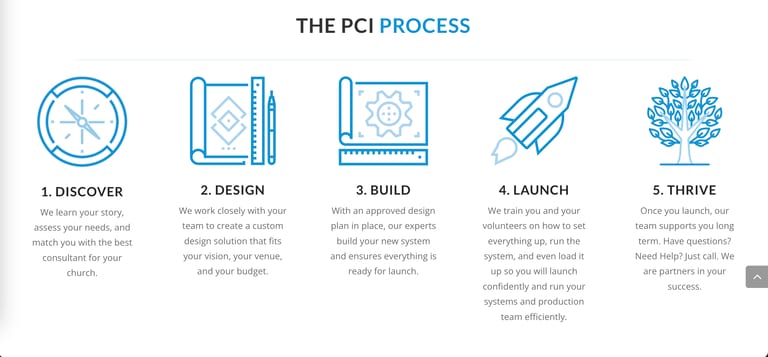
Planting a church, but don’t have a permanent building yet? Maybe you’re in a library, a school, or another business that has allowed you to use their space temporarily. Thankfully, there are amazing companies that can help you in this process. Portable Church Industries has everything you need to set up in a temporary location. They even have a checklist to make sure you’re getting what you need.
Frequently Asked Questions
Related Links: